Estrategias de moderación de comunidades en línea: un manual práctico
¿Qué significa la moderación de comunidades en línea, cómo medimos su éxito y qué podemos aprender de las comunidades de The Last of Us?



¿Alguna vez has encontrado una comunidad que parece estar llena de ‘gente como tú’? Por fin, hay multitudes que quieren hablar sobre los juegos que te gustan, tus pasatiempos o tus intereses profesionales. Pero entonces las cosas dan un giro y el grupo se inunda de spam y abusos. Por eso, la moderación de comunidades en línea es esencial.
Sin ella, las comunidades en línea no pueden crecer. Piénsalo como una tienda física. Necesitas seguridad y un espacio bien presentado para que los clientes sigan regresando. Si dejas tu comunidad en línea abierta a cualquiera, fracasará. Lo he visto suceder. Incluso dos o tres trolls pueden destruir una comunidad de 40,000 miembros.
Una moderación sólida es fundamental para evitar daños irreversibles a la cultura de tu comunidad. Los entornos en línea son como cualquier otra parte de la sociedad. La gente quiere sentirse psicológicamente segura y respetada. Si el 41% de los adultos estadounidenses reporta haber sufrido acoso en línea, las audiencias abandonarán las plataformas llenas de comportamientos tóxicos. Ahora, la tendencia principal es utilizar exclusivamente herramientas de IA para fomentar la salud en las comunidades. Pero la práctica de la moderación comunitaria puede ayudar a lograr el mejor resultado en conjunto. Los usuarios siempre son más leales a las comunidades donde pueden influir en las cosas.
Ya sea que operes una comunidad en línea por diversión o como una extensión de tu marca, mantener bajo control el comportamiento inaceptable sigue siendo uno de los factores más importantes para el crecimiento.
¿Qué es la moderación de comunidades en línea?
La moderación comunitaria es el proceso de hacer cumplir las reglas en el contenido y comportamiento generado por los usuarios, utilizando una combinación de moderadores humanos, herramientas comunitarias y automatización. Se basa en los propios participantes de la comunidad, quienes gestionan el contenido y el comportamiento de los miembros. Es la práctica de gestionar comentarios, discusiones y reglas comunitarias mediante herramientas específicas dentro de la aplicación: reportes, reclamaciones, bloqueo personal y shadow banning.
Los mejores sistemas de moderación comunitaria tienen una estructura clara y un código de conducta que brinda a los nuevos miembros claridad sobre lo que es y no es aceptable, además de apoyarse en los participantes de la comunidad y contar con una jerarquía con control adicional por parte de la plataforma.
Un informe de Meta de 2025 revela que las cuentas falsas, con 1.4 mil millones de reportes en todas las aplicaciones de Meta en el primer trimestre, son uno de los mayores dolores de cabeza para los moderadores que protegen contra el spam. Si bien la naturaleza del contenido que la gente publica es esencial para establecer la calidad, el acoso y el hostigamiento también son comportamientos repulsivos que deben erradicarse. Por supuesto, estos datos de Meta muestran solo un nivel de problemas con las redes sociales externas y los servicios de mensajería, pero puedes escalar las estadísticas a tu propia plataforma.
El objetivo principal de una comunidad en línea es proporcionar un entorno positivo para que las personas se conecten y discutan temas específicos, lo cual es extremadamente importante cuando la comunidad se encuentra internamente en la marca.
“Nos comprometemos a actuar e interactuar de maneras que contribuyan a una comunidad abierta, acogedora, diversa, inclusiva y saludable.” Contributor Covenant de GitHub
Por qué la moderación comunitaria efectiva es importante para las comunidades propias
Si eres una marca con una comunidad propia, necesitas "proteger tu territorio" para convertirte en una fuente confiable de conversación en tu nicho.
Nada resume esto mejor que las pautas de la comunidad de Twitch, que dicen que “La comunidad es el corazón de Twitch”, pero para garantizar que los usuarios tengan la mejor experiencia, la seguridad es un “requisito previo”. Twitch es una plataforma externa, y si transfieres contenido como transmisiones en vivo al perímetro de tu plataforma, definitivamente también deberías adoptar las reglas comunitarias para tu marca.
1. Calidad y conversación
La gente llega a una comunidad en línea buscando información y claridad. Pueden llegar a través de búsquedas o recomendaciones, pero los usuarios se quedan por la calidad de la conversación. Si dejas la comunidad de tu marca sin moderación, la calidad y la conversación serán ahogadas por el ruido. Las herramientas de IA, que son excelentes para el spam, no pueden ser precisas con la calidad de la conversación.
Por ejemplo, esto es relevante para un fenómeno bastante nuevo llamado fanchuan, donde en las comunidades de fans ocurren ataques indirectos a celebridades o clubes deportivos. Para tales casos, la moderación comunitaria por parte de sus miembros es esencial para detener el discurso de odio. Puede ser especialmente relevante para clubes deportivos o aplicaciones de ligas deportivas, cuando, después del partido, los fanáticos de los equipos perdedores atacan a los ganadores.
2. Satisfacción y sentido de pertenencia de los miembros
El informe de transparencia de Reddit de 2024 revela datos convincentes: los moderadores y administradores eliminaron más del 3% de todo el contenido creado; la mitad fue eliminada por moderadores y la otra mitad por administradores. Aunque el número parece pequeño, significa que la moderación comunitaria, ya sea manualmente o a través de la herramienta Automod de Reddit, eliminó casi uno de cada 30 mensajes de la plataforma.
La seguridad crea pertenencia. Si las personas participan en un espacio en línea donde se sienten seguras, participan más profundamente.
Estás cultivando un espacio donde los miembros se sienten cómodos haciendo preguntas, compartiendo experiencias y construyendo relaciones. Para una marca, esto convierte a los usuarios casuales en embajadores leales de la marca.
3. Protección de la reputación
Como empresa con una comunidad, esta es una extensión de tu marca. Es un pasivo o un activo.
Si no se modera, eventualmente se convertirá en un pasivo a medida que el discurso de odio, la desinformación, el spam y las estafas entren en el espacio en línea. Las malas noticias se difunden rápidamente en línea, por lo que incluso una sola publicación viral inapropiada podría dañar la percepción de tu marca con el tiempo.
Cuando se lanzó The Last of Us Part II en 2020, muchos usuarios publicaron un “review bomb”, inundando plataformas de reseñas (como Metacritic) y foros con comentarios extremadamente negativos, a menudo abusivos y violentos sobre el juego y sus desarrolladores. Esto no se trataba de una crítica honesta; muchas reseñas eran claramente hostiles, incluyendo amenazas de muerte y odio contra los desarrolladores, lo cual podría haber sido evitado por los usuarios si se hubieran proporcionado herramientas de moderación comunitaria en las plataformas de reseñas. Si se hubiera hecho, los fanáticos podrían haber limpiado por sí mismos las reseñas hostiles que violaban el código.
4. Cumplimiento legal y mitigación de riesgos
En una comunidad propia, también debes pensar en la responsabilidad legal. Es tu responsabilidad eliminar el contenido ilegal y hacer cumplir las reglas de privacidad como el RGPD.
Ignora esto y podrías enfrentarte a demandas por negligencia. Esto convierte a la moderación en un requisito de cumplimiento, no en un método opcional para proteger a los miembros y a tu marca.
Moderación vs. Gestión de la comunidad (Y cómo trabajan juntos)
Dirigir una comunidad próspera requiere mucho trabajo. A continuación, debemos distinguir entre moderación comunitaria y gestión. Son conceptos separados, pero deben trabajar juntos para impulsar un crecimiento efectivo a largo plazo.
James Gallagher, Jefe de Gestión de la Comunidad en Keyword Studios, explica que la moderación es fundamental para una “participación comunitaria exitosa” al construir servidores de Discord.
Moderación comunitaria
La moderación comunitaria trata sobre la seguridad y el cumplimiento. Es un mecanismo defensivo para prevenir daños y hacer cumplir las reglas. Debe incluir herramientas que ayuden a la comunidad a moderar el espacio, como reportes, la oportunidad de ampliar listas de bloqueo de palabras, campos para comentarios o incluso la oportunidad de aplicar shadow ban a quienes rompen las reglas.
Al moderar una comunidad, pasarás más tiempo reaccionando a las violaciones. En el día a día, implica eliminar contenido prohibido, bloquear usuarios disruptivos y manejar quejas y advertencias. La clave del éxito aquí es un enfoque firme, consistente y protector. Cambiar constantemente las reglas de lo que está permitido y lo que no, molestará a los usuarios.
Gestión de la comunidad
La gestión de la comunidad es un enfoque para el crecimiento y la participación de tu grupo. Implica fomentar la conversación, reconocer a los colaboradores e impulsar el diálogo.
Este es el lado agradable de dirigir un foro en línea, ya que crearás contenido, recompensarás a los miembros positivos, organizarás eventos y construirás relaciones. Es el lado cálido, alentador e inclusivo de gestionar una comunidad.
Se complementan entre sí
La moderación y la gestión se complementan muy bien. La moderación crea el contenedor para una comunidad segura y confiable.
Como se señaló anteriormente, las mejores prácticas del Contributor Covenant de GitHub para líderes comunitarios efectivos requieren que sean responsables tanto de la participación positiva como de la protección contra comportamientos inaceptables.
Sin herramientas de moderación sólidas, incluso la mejor gestión comunitaria tiene dificultades. El sistema de moderación debe construirse de manera que la gestión comunitaria se dedique al crecimiento de la participación, sin limpiar espacios de spam, pero también pueda proporcionar retroalimentación en cualquier momento cuando sea necesario. Sin una, la otra fallará.
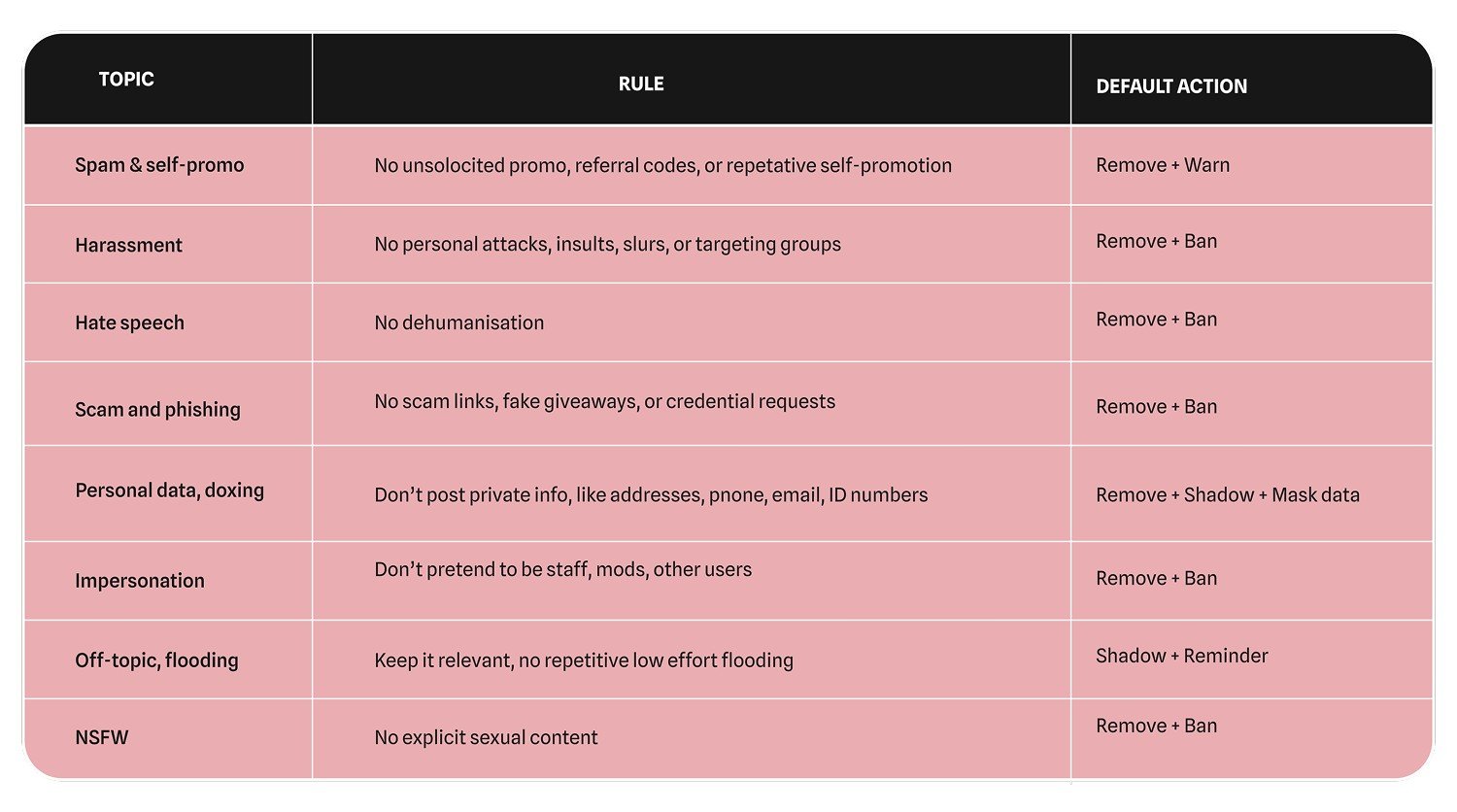
Estrategias y manual de moderación comunitaria
Trata tu moderación comunitaria como una parte integral de tu negocio. Eso significa que necesitas un Procedimiento Operativo Estándar (SOP) claro para asegurarte de que todo funcione y se ejecute de manera eficiente.
Aquí tienes un manual paso a paso:
Paso 1: Antes del lanzamiento, establece reglas claras
Tener reglas desde el primer día con políticas preescritas elimina la emoción de la aplicación. Cuando las emociones se intensifican o los miembros se quejan, tendrás una guía clara a la cual referirte.
Redacta tus pautas, revísalas, obtén comentarios de los miembros y publícalas de manera destacada.
Inspírate en Twitch, que trata sus pautas comunitarias como un documento vivo que se actualiza regularmente.
Paso 2: Onboarding
Las violaciones provienen más comúnmente de miembros que ni siquiera sabían que había reglas. Antes de que los miembros puedan unirse, asegúrate de que estén obligados a aceptar las reglas.
Incluso si diriges un pequeño tablón de anuncios comunitario en Facebook, debes verificar a los usuarios antes de permitirles el ingreso.
Por ejemplo, St Agnes Notice Board UK requiere que los usuarios envíen su ubicación y el motivo de su unión antes de presentar las pautas de la comunidad.
Esto evita posibles spammers y reduce las violaciones accidentales. Una confirmación explícita mediante casilla de verificación y un recordatorio de bienvenida por correo electrónico pueden combinarse con una publicación fijada en el espacio principal de la comunidad.
Paso 3: Quejas y reportes
A medida que tu comunidad crezca, no podrás moderar todo. Así que no temas aprovechar a tu comunidad para señalar cualquier problema.
Haz que el reporte sea fácil con un botón visible o un formulario de quejas. Además, los miembros comprometidos pueden ser elevados al estatus de moderador para ayudar a detectar comportamientos rebeldes.
Paso 4: Decisiones y escalada
Siempre debes garantizar una aplicación consistente, por lo que la misma violación siempre debe resultar en el mismo resultado. No flexibilices las reglas para ningún usuario. Esta consistencia genera confianza, mientras que la aplicación inconsistente la destruye.
Asegúrate de:
- Revisar el contenido reportado dentro de las 24 horas
- Aplicar las pautas de manera consistente
- Explicar las decisiones claramente a los usuarios descontentos
Paso 5: Actualizaciones regulares
A medida que tu comunidad cambia y crece, tus reglas deberán crecer con ella. Es posible que detectes nuevos comportamientos inaceptables.
- Actualiza las reglas de la comunidad:
- Trimestralmente (como mínimo):
- Después de recibir comentarios de la comunidad
- Cuando surjan nuevos patrones de comportamiento
- A medida que la cultura cambia
Asegúrate de anunciar los cambios en las reglas públicamente para que los miembros los entiendan y no haya violaciones accidentales.
Combinación de herramientas de moderación comunitaria e IA
No es razonable esperar que los humanos sigan el ritmo de la tecnología. Afortunadamente, existen varios tipos de herramientas de moderación comunitaria y sistemas de IA que pueden mejorar tu proceso de moderación.
1. Pre-moderación y filtrado de palabras clave
Los sistemas deben marcar automáticamente el contenido con palabras o patrones específicos antes de su publicación. Esto proporciona una prevención en tiempo real en lugar de limpiar después de que se haya hecho el daño.
Deberías poder agregar palabras clave personalizadas específicas para tu comunidad, además de tener un conjunto estándar de palabras prohibidas para filtrar automáticamente.
2. Moderación de contenido por IA
Los sistemas de PNL (Procesamiento de Lenguaje Natural) pueden entender el contexto, la intención e incluso el sarcasmo. Ya no se trata solo de coincidencia de palabras clave.
La IA es capaz de detectar el discurso de odio más allá de palabras específicas, por lo que puede incluir insultos sofisticados o diferenciar frases positivas como "lo estás bordando" del discurso de odio.
Las herramientas de IA también pueden extenderse al reconocimiento de imágenes para detectar contenido NSFW (no seguro para el trabajo) e inapropiado,
análisis de contexto de capturas de pantalla y comprensión de memes. Ofrece una comprensión casi a nivel humano sin el tiempo y el costo que esto conlleva.
3. Enmascaramiento de datos personales
Las herramientas de enmascaramiento de datos personales detectan y redactan automáticamente información personal. Eso podría incluir números de teléfono, correos electrónicos, números de seguridad social, direcciones y más.
Incluso si los moderadores humanos pasan por alto un reporte, esto añade una red de seguridad de cumplimiento adicional. Estas herramientas incluso incorporan diferentes niveles de sensibilidad. Por ejemplo, más estrictos en comunidades de soporte.
4. Controles iniciados por el usuario
A los miembros de la comunidad se les puede permitir cierto nivel de automoderación. Un botón de reporte debe ser fácil de encontrar para permitir quejas.
Además, una función de bloqueo, silencio o ignorar permite a los miembros excluir publicaciones sensibles de sus feeds. Bloqueará la visualización de contenido de otros usuarios o incluso silenciará palabras clave o temas particulares. Esto otorga un empoderamiento adicional a los miembros para gestionar su propia experiencia.
5. Funciones de auto-ban
Algunas herramientas tienen funciones de auto-ban configuradas. Esto significa que si un miembro infringe claramente las pautas, o si otros participantes señalan claramente contenido inapropiado, como publicar enlaces de spam o contenido NSFW, el sistema suspende automáticamente dicha cuenta.
6. Herramientas en tiempo real y de transmisión en vivo
Se pueden aplicar herramientas adicionales a los chats en vivo. Puedes ejecutar reglas automáticas, como el modo lento que limita la frecuencia con la que un usuario puede publicar, o la detección automática de spam para la suspensión inmediata o el rechazo de mensajes.
Métricas: Cómo medir una moderación exitosa
Cuando la idea principal es proporcionar moderación y compartir la oportunidad de moderar con la comunidad, todavía hay métricas que muestran si el proceso es exitoso y si el sistema construido es relevante. Precisión, velocidad y satisfacción del usuario.

La precisión es la métrica principal que muestra la proporción de decisiones de moderación correctas sobre todas las decisiones tomadas.
Por supuesto, lo que mejor se adapta a esta métrica es un conjunto de herramientas automatizadas. Tu modelo de IA elimina mensajes, y tú verificas cuántos mensajes se perdieron o se eliminaron por error. El objetivo de cualquier sistema de moderación es el 100%. Incluso una precisión del 99% no es lo suficientemente buena por sí sola, porque uno de cada cien mensajes es spam o violento. Por eso se necesita la moderación comunitaria incluso para la plataforma con herramientas de IA. La comunidad puede aumentar el número de precisión de moderación del 93-97%, que es una tasa promedio para LLM, al 100%.
Lo que también es importante: la precisión del 100% se mide con respecto a las propias reglas de la plataforma. Al medirla, debes considerar el nivel de libertad que deseas brindar a las comunidades internas.
La velocidad de moderación es una métrica que básicamente incluye dos parámetros relacionados con el tiempo: TTA (tiempo de acción) y tiempo de revisión. La moderación generalmente incluye diferentes herramientas, y el TTA muestra un tiempo promedio para todas las acciones (eliminar un mensaje violento, resolver el reporte, banear usuarios, enmascarar datos, etc.). El tiempo de revisión se refiere a las herramientas específicas necesarias para la revisión, como una reclamación o reporte de usuario. Las regulaciones gubernamentales generalmente especifican 24 horas para ambos parámetros y requieren expectativas de formulario para los usuarios cuando reciben la respuesta. En la práctica, cuanto más rápido sea el TTA, mayor será la lealtad del usuario.
La satisfacción del usuario es típicamente una mezcla de retroalimentación directa del usuario y señales de comportamiento. Para recopilar retroalimentación directa, las plataformas realizan encuestas de satisfacción posteriores a la decisión, donde se considera saludable un 70–80% de respuestas positivas. Como métricas de comportamiento, puedes seguir la retención de usuarios 30–90 días después de una acción de moderación. Para que esta métrica sea confiable, compárala con cohortes no moderadas para detectar la falta de compromiso.
Construye comunidades dentro de la aplicación más seguras con Watchers
Contáctanos para construir comunidades dentro de la aplicación y crear sistemas de moderación comunitaria con herramientas transparentes y convenientes. Watchers proporciona un sistema de moderación de 5 capas para chats dentro de la aplicación que incluye listas de bloqueo, herramientas de IA, enmascaramiento de datos personales, herramientas en tiempo real para administradores y herramientas de moderación comunitaria. Los usuarios pueden enviar reportes y ocultar a los autores de contenido inapropiado para su espacio personal, para que su feed sea cómodo y seguro.
Te ayudaremos a encontrar la solución que se adapte a ti y aumente la lealtad y la confianza de tus usuarios hacia tu marca.
Preguntas frecuentes sobre moderadores de comunidades en línea
¿Qué es la moderación comunitaria?
La moderación de comunidades en línea implica gestionar un grupo en línea para mantenerlo libre de abusos, trolls y comportamientos dañinos. Una moderación efectiva requiere la aplicación de pautas, el monitoreo del contenido y los comentarios de los usuarios, junto con la creación de un entorno social positivo.
¿Cómo se modera una comunidad en línea de manera efectiva?
Para moderar una comunidad en línea de manera efectiva, necesitas establecer un conjunto claro de reglas que la gente deba seguir. Luego, las reglas deben ser aplicadas por moderadores humanos utilizando herramientas como el filtrado de palabras clave y la coincidencia de PNL. Se debe establecer un proceso disciplinario con advertencias, tiempos de espera y baneos para los infractores.
¿Cuáles son las mejores prácticas para la moderación de comunidades en línea?
Las mejores prácticas para la gestión de comunidades en línea comienzan con bases sólidas de pautas claras y una aplicación consistente de las reglas. A medida que la comunidad crece, agregarás un equipo dedicado para moderar y defender los valores del grupo de manera proactiva. ¡Trata a los miembros de manera justa con acciones disciplinarias y no olvides recompensar el buen comportamiento!
¿Qué herramientas ayudan más con la moderación comunitaria?
Varias herramientas de moderación comunitaria agilizan el proceso. Los filtros de contenido de IA pueden marcar publicaciones y comentarios con un contexto y comprensión profundos. Esto mejora las herramientas de filtrado de palabras clave que tienen parámetros estrictos. Watchers es un ejemplo de moderación avanzada con funciones de IA flexibles para crear un espacio seguro personalizado.
Referencias
- Tendencias en la moderación de contenido de Meta 2017–2025: Spam, cuentas falsas y estándares comunitarios | Mobile Ecosystem Forum
- Pautas de la comunidad | Twitch
- Comprender el Fanchuan en plataformas de transmisión en vivo: una nueva forma de comportamiento antisocial en línea | Proceedings of the ACM on Human-Computer Interaction, Vol. 9, No. 7
- Moderación de contenido por LLM: de la precisión a la legitimidad | Artificial Intelligence Review
- La guía completa para la moderación de contenido impulsada por IA: tendencias, herramientas y mejores prácticas en 2025 | Blog de Ai march
- Ley de Ejecución de Redes (Network Enforcement Act) | Wikipedia
- ¿Qué es una buena puntuación CSAT? | Blog de Survey monkey
- Redes sociales, el RGPD y los datos | Data & Marketing Association
- Polarización impulsada por la ideología en las calificaciones en línea: el review bombing de The Last of Us Part II | Quality and Quantity
- Seguridad vs. Censura: Moderación comunitaria de Watchers | Blog de Watchers
Impulsa tu plataforma con
Herramientas integradas de Watchers para una interacción definitiva


