Sports Marketing Trends 2026: How Brands Are Redefining Fan Engagement
After diving deep into the shifting landscape of the sports industry and the fast-paced world of digital marketing, we've uncovered seven standout trends that shaped this year and are set to become even more influential in 2026.


In 2025-2026, sports marketing will continue its shift toward community-led, digital, and immersive experiences. Discover the trends that will gain the most traction as fan engagement moves further into owned platforms.
What Is Sports Marketing Today?
- Digital marketing has long been central to sports organisations, complementing the live experiences and expanding it. Today, the term includes everything a brand does online to:
- Promote a sports club, league, tournament, event, charity organisation, or even fitness brand, and the activities associated with them.
- Foster long-term relationships with fans and communities, before, during, and beyond live events.
- Build digital products and new revenue streams, from subscriptions and content to memberships and virtual experiences.
From global clubs like FC Barcelona to smaller teams and leagues, sports organisations increasingly use their digital platforms (especially apps) as a home for fandom. They offer exclusive content, interactive experiences, digital memberships, and data-driven features to keep fans on their owned channel.
Many of them, like Manchester City, Bayern Munich, and the NBA, have expanded ecosystems further, but the underlying shift is consistent across the industry: digital platforms are changing their focus from supporting campaigns to becoming the actual campaigns.
Why Sports Marketing Is Changing So Fast
Sports digital marketing keeps up the pace with the rapid expansion of sports technology, a market projected to grow at a 20.8% CAGR from 2023 to 2030.
But technology is just one piece of the puzzle, alongside shifts in how fans live, consume, and connect with sport. Global migration and mobility mean fans increasingly support teams from afar, relying on digital touch points to maintain a sense of closeness and belonging.
Live streaming platforms, mobile apps, data analytics, AI-driven personalisation, and interactive digital tools are now embedded at every step (broadcasting, performance analysis, fan engagement, monetisation, community building, etc.).
This collision of factors:
- Transforms how sports events are produced, distributed, and consumed. Fans are now able to access live stats, player data, alternate camera angles, and in-game predictions while watching.
- Expands fan engagement beyond the stadium. Platforms recreate presence, participation, and continuity for fans who may never set foot in a stadium but still want to feel part of the club, league, or community.
- Raises new questions and challenges around balance. Brands experiment with immersive features while trying not to disrupt the core emotional experience of live sports.
The fragmentation of social networks, the unpredictability of paid ads, and the decline in organic reach are the main reasons sports digital marketing must change. According to Backlinko, social media users engage, on average, with 6.83 social media platforms. Also, we observe a 24% drop in organic clicks and an 18% decrease in paid clicks due to Google’s AI Overviews (Dr. Dave Chaffey).
But that’s not all. Streaming content and direct-to-fan consumption exploded, especially among younger fans (nearly 52% of viewers aged 18-34 say online streaming is their primary way of consuming sports).
Fans demand continuous access to personalised content, live events, and interactions with favourite athletes. That’s why athletes such as Cristiano Ronaldo, Lewis Hamilton, and Alexia Putellas maintain an on-demand digital ecosystem, keeping fans connected outside competitions.
AI lowers content-creation costs and enables new participation-based revenue models. As reported in Sports Business Journal, industry leaders expect AI to move from experimentation to infrastructure:
“AI will go mainstream for optimizing and assisting content creation and storytelling within our partner institutions.” (George Scott, President of Sidearm Sports)
“A sports team will optimize using AI to set thousands of unique prices for unsold seats in a single game — a first for the industry.” Jordy Leiser, CEO of Jump
All of these are prompting sports brands to rethink how they build relationships beyond broadcast-led tactics. Hence, the focus on owned platforms, community, data, and adaptive digital experiences, sports marketing trends we’ll detail below.
Top 7 Sports Marketing Trends for 2025-2026
As we move into 2026, brands rebuild how they engage and retain sports fans. The following trends represent the most significant shifts in sports digital marketing.
Trend 1 - Community-Led Marketing on Owned Platforms
Sports fandom is no longer rooted solely in team allegiance, but in belonging. As Media Culture notes, nearly one in five die-hard fans associate fandom with social fit.
To create a single place where fans truly feel they belong, sports organisations leverage their own fully controlled platforms.
For instance, Manchester City’s official app supports live match chats, exclusive video drops, and member-only content. And DAZN complements live streams with interactive features, watch-along formats, and community-driven viewing experiences.
The fans have made it clear that:
They want connection — “83% of consumers agree that brands should facilitate connections between people, not just between people and products.”
They trust smaller spaces more — “Nearly 40% of consumers trust micro-community recommendations as much as personal ones.”
Thus, in 2025-2026, we’ll see more in-app chats, brand-run forums, clubs, memberships, and fan hubs. A range of new formats in which brands own the relationship and can facilitate year-round engagement.
Trend 2 - Gamification and Competitive Fan Challenges
Games and challenges activate passive fans. The predictions, rankings, and rewards give them reasons to stay longer and interact more. Whether they choose to share their progress or boast about their prizes online, it’s excellent social content that boosts your organic reach.
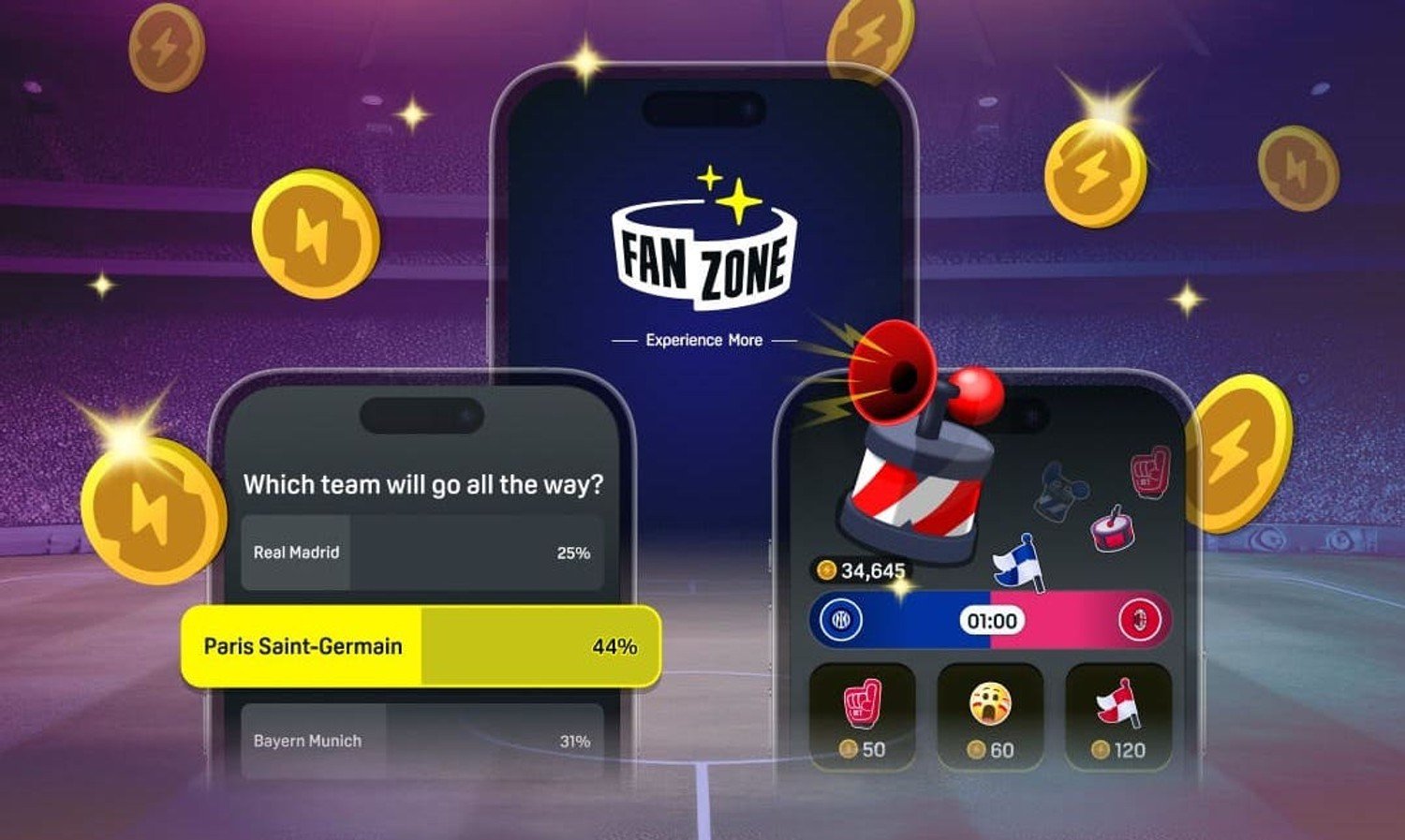
We’ve already seen this in practice. DAZN’s Fanzone let FIFA Club World Cup viewers play quizzes, vote, win prizes, and watch alongside fans around the world (a blend of viewing and participation).
As a novelty, in 2026, leagues are increasingly redesigning their broadcasts to be interactive, data-rich, and participatory. And so, we’re witnessing the evolution of gamification into the broadcast itself.
The National Football League is experimenting with alternate, entertainment-led broadcasts. And the National Basketball Association is partnering with FOX and Disney to produce live game broadcasts featuring The Simpsons and Disney characters.
These experiences may not yet score fans on leaderboards, but they signal where interactive viewing is headed next — from an add-on to a core part of the experience.
Trend 3 - First-Party Data Strategy
Instead of relying on third-party, cookie-dependent, or platform-inferred data, brands will collect first-party data directly from their audience, with clear consent and context. This can happen when fans create accounts (join a club, register in an app) or participate in challenges, events, chats, and streams.
For instance, the NFL has centralised first-party fan data to streamline outreach and enhance personalisation. By consolidating all consented fan profiles previously scattered across systems, the League gained a clear view of an audience of 70+ million active fans across league and team properties (as of July 2024).
Trend 4 - Female Sports as a Major Growth Vector
The rise of women's sports is accelerating as streaming platforms have removed the constraints of linear schedules. Today, happily, women’s competitions are easier to discover, follow, and build communities around:
UEFA Women’s Euro 2025 final was one of the most-watched TV moments of the year (viewed live by over 16.2 million people in the UK).
Women’s Rugby World Cup 2025 attracted 12 million total viewers across linear channels and 10.5 million viewers for streamed matches.
Female sports have not been oversaturated by legacy sponsors and decades of cynical marketing (as men’s sports). Trust is easier to earn in this sector, and the commercial landscape is still wide open.
Peter Daire, Senior Executive Advisor at PwC Middle East, says:
“Lower media coverage for women's sports is a global issue that is at last beginning to improve. We absolutely know there is a significant and growing audience for women's sport, but to accelerate this…it’s crucial that it is presented with high production values, across multiple platforms that suit viewing habits.”
Trend 5 - Athlete-Driven Influence and Creator-Led Campaigns
Athletes evolve from the face of a campaign to becoming creators and community leaders. Brands will involve them in content creation, live interactions, and community activation. All through joint streams, behind-the-scenes content, Q&As, and watch-along events.
But instead of the usual handful of global sports stars, we’ll see more emerging talent, grassroots athletes, or niche sports creators. People who feel more accessible and authentic, like:
- Former endurance athlete Mark Lewis, who’s been documenting training realities rather than elite performance
- Football player Ellis Platten, who connects directly with grassroots players through matchday content and behind-the-scenes club life
- Molly McCann, who has cultivated a strong local fan base in combat sports
The most recent Dentsu report on media trends backs up these preferences:
- Twice as many people engage most often with influencers under 1M followers as people who engage most often with mega-influencers.
- Gen Z are more likely to engage with mega-influencers (1M–10M followers), while Gen X tend to favour nano-influencers (1k–10k followers).
Marketers acknowledge these preferences, and 61% of them plan to increase investment in creator content in 2026. (Kantar)
So instead of using sponsorships that only focus on reach, they’ll create partnerships that focus on relationship-building. Athletes will help brands earn trust inside the communities they already lead.
Trend 6 - New Digital Revenue Streams for Sports Brands
Unlike traditional marketing, which relies primarily on events, digital marketing can generate new revenue streams through subscriptions, virtual tournaments, pay-per-view services, exclusive digital content, and more.
A clear example is the NBA League Pass. Initially a simple streaming product, the Pass has evolved into a multi-tier digital subscription. Currently, it offers live games, condensed replays, personalised highlights, and alternate viewing formats. For many fans, this is the primary way they experience the league. Not as a broadcast, but as a paid, always-on digital product.
According to a PwC survey, these initiatives appeal to younger audiences, who are also more tech-savvy and expect seamless access to their favourite sports events, communities, and even athletes.
“Unique experiences were the most frequently cited important characteristic for younger fans when attending a live sporting event.”
Trend 7 - AI-Powered Hyper-Personalisation
68% of consumers say sports personalisation significantly increases their brand satisfaction.
For years, personalisation was a limited option. It relied on static rules, basic attributes (name, location, favourite team), purchase history, and simple segments (“fans of x”, “men 25-34”, etc.)
AI has gradually changed the landscape, with brands like Lays using it to send personalised videos from Barcelona’s superstar Messi. This demonstrated how AI can enhance localisation and creative relevance, but while still operating within predefined scenarios.
Then, AI-powered hyper-personalisation began leveraging real-time behaviour, context, and intent. The goal is to determine not just who a fan is, but what they want at the moment. Content adapts dynamically based on how fans watch, interact, pause, skip, or engage.
Platforms such as the NBA League Pass and Amazon Prime Video use in-stream data analytics to adjust highlights, stats overlays, and viewing formats in real time. Thus, they respond to fan behaviour as it happens.
As PwC notes, “hyper-personalized digital advertising coupled with real-time fan data will only supercharge these trends—empowering sponsors to tailor their messages to further deepen targeted engagement.”
By this logic, NBC used AI to generate a clone of Al Michaels, who drew on 5,000 hours of Olympic coverage to deliver personalised daily streaming recaps of the games. This experiment points toward a future where every fan experiences sport through a lens shaped by their own behaviour and preferences.
Best Practices for Sports Brands in 2026
In 2026, if you want to have a successful sports brand, you should:
- Use social platforms as an acquisition layer and deliver the core experience through an owned app, platform, community, or fan hub.
- Create year-round engagement loops to give fans reasons to show up frequently.
- Extract your first-party data from value-based interactions (games, communities, and access to custom experiences).
- Use your data to improve fans' experiences before fuelling your marketing efforts.
- Build communities in places with strong identities (women’s leagues, niche fan groups, grassroots athletes).
- Involve members in shaping the community's language, rituals, and norms.
- Monetise proximity with behind-the-scenes, live chats, and early-access content.
- Test different revenue models like subscriptions, premium access, and exclusive digital content.
- Use AI to interpret user behaviour and intent, personalising the timing, tone, and format of your content.
All these trends converge around two strategic moves we’ll explain below.
Make Your Own Platform the Primary Fan Hub
During live events, fans split their attention across multiple screens and platforms. PwC found that “more than two-thirds use social media during an event, 47% surf the web, and 24% play video games while watching sports.”
To prevent attention fragmentation, you’ll have to embed the social layer directly into your brand-owned environments. Live chats, watch parties, polls, predictions, and reactive fan games will move interaction away from public feeds and into the apps and platforms you control.
Nicolas Mayer, Partner at PwC Middle East, says:
“Sport businesses should aim to maximise visits by creating a rich events ecosystem with diverse spending opportunities — doing so will allow them to build direct, long-lasting communication channels with their consumers, enabling them to tailor their offering towards optimal experiences and commercial offerings for their different demographic categories.”
When participation becomes the goal, fans have reasons to return on non-match days. They check predictions, build streaks, react in real time, and engage with other fans.
La Liga uses in-app interactions and second-screen features to keep fans engaged. Similarly, Formula 1 has built a digital ecosystem of live data, exclusive content, and social interaction that attracts fans all year round.
Use Personalisation to Scale Fan Relationships
Want to tailor experiences to how fans actually watch, interact with, and participate in your content and community? You can use behaviour-based segments, real-time triggers, and dynamic content blocks.
That might mean changing content based on in-app behaviour, surfacing challenges tied to live moments, or adjusting offers based on community activity and viewing habits. All without launching new marketing campaigns each time.
When fans consistently receive content, challenges, or offers that match their interests and intent, engagement and loyalty deepen. Personalisation turns fan platforms into self-refreshing ecosystems, where relevance is driven by behaviour rather than broadcast schedules.
As Kevin Westcott, Vice Chair at Deloitte Global Telecommunications, says:
“We now expect to see a new era of streaming, one that prioritises user experience and innovation. The future of AI-powered streaming lies in platforms that can anticipate individual preferences, deliver tailored content, and blur the lines between traditional viewing and interactive experiences.”
Challenges Sports Marketers Face
As sports digital marketing evolves, new structural challenges occur. And while these barriers don’t slow the shift, they do shape how successfully brands can execute new strategies and keep pace with trends.
Data Privacy, Compliance, and Trust
A Voice of Consumer survey by PwC reveals that:
- 57% of executives position trust as a competitive advantage.
- 83% of consumers say protecting their personal data is the most important factor influencing their trust in a brand.
Therefore, when collecting first-party data, sports brands must be transparent, compliant, and intentional about their processes. Regulations like GDPR aren’t optional.
Relationally, fans also need to understand the value they receive in exchange for sharing their data — access, better experiences, personalisation, etc. If this value exchange isn’t clear, trust declines and participation drops.
Cutting Through Content Overload
While AI has made content production and management faster and cheaper, volume has exploded, but attention has eroded.
“We have seen a huge increase in the volume of ‘AI-slop’ generated in the service of automating marketing, but many marketers are realising that such content is all too often generic and so not sufficiently engaging to gain engagement from readers, so won’t get cut-through in the search engine or social media algorithms.” (Smart Insights)
With so much sports content shared across every platform, one can’t just throw off “another social media video”. Instead, they need content that invites interaction, choice, response, and shared experience.
This shift doesn’t mean exposure no longer matters. It means attention quality matters more than ever. Data from Dentsu shows that a single CTV exposure now typically lifts long-term sales by 3.16% (over three years), close to the uplift from broadcast television (3.61%). So brands don’t need to publish more. They need to design content and experiences that hold attention and give fans a reason to stay involved.
Connecting with Diverse and Multigenerational Audiences
Younger audiences rarely engage with sport as a single-screen, linear experience. They expect interactivity, authenticity, and digital-first formats that fit into multi-tasking habits.
The recent PWC Research shows that only 19% of younger fans watch an entire game when they tune in at home, and 1% do nothing but watch. However, they’re 1.4 times more likely than older fans to attend a live sports event at least once a month. And they spend, on average, £70 more on tickets than their older counterparts.
Older fans prioritise tradition, clarity, and ease of use.
As previously shown, Millennials place greater value on access and community, and are most willing to pay for a sports subscription service (57%), followed by Gen Zers (53%) and Xers (40%).
Add to that the difference between local and global audiences, who follow teams for very different reasons, and it becomes clear why one-size-fits-all experiences no longer work.
The challenge is balancing these expectations without fragmenting the brand, which, once again, means personalisation is key. All audiences should be able to engage in ways that feel natural to them, because they might be different, but they’re all valuable.
The Future of Sports Digital Marketing
The future belongs to brands that no longer chase attention on rented platforms and instead build lasting fan relationships across channels and environments they own. Fans will no longer just follow. They’ll belong. Engagement won’t just spike around campaigns. It will grow year-round.
Communication will be more than broadcasting. It will become interactive and adaptive. And data will no longer be inferred. It will be willingly shared directly by fans who understand the value of doing so.
Get in touch to stay in trends
In 2026 and beyond, the sports industry will stop treating fans as audiences we must chase across a thousand channels. They’ll start treating them as communities to serve. Engaging fans will focus on building stronger connections grounded in ownership, trust, and a strong sense of belonging. Try to use Watchers to grow fan engagement, build communities, collect and analyse first-party data internally, and stay in touch with users. Boost your sports business with Watchers ' community-building tools.
FAQs About Sports Digital Trends 2026
What are the latest trends in sports marketing briefly?
Marketing in sports is being shaped by broad shifts like:
- Rapid growth of women’s sports
- Rise of athlete-led influence
- Changing fan expectations around access and authenticity
- New revenue models around subscriptions and direct-to-fan experiences
Digital marketing plays a central role in accelerating these trends, with owned online communities and AI-powered hyper-personalisation at the core.
How is AI changing sports marketing and fan engagement?
AI enables real-time, adaptive personalisation at scale. Brands use it to tailor content, timing, offers, and interactions by accounting for individual fan behaviour, context, and intent. This leads to more relevant experiences, stronger retention, and higher lifetime value.
How will sports marketing continue to evolve over the next few years?
Marketing will continue to evolve inside owned sports platforms. Brands will prioritise participation over reach and relationships over impressions, developing systems that favour personalisation and continual engagement over campaigns. It will be a long-term engagement strategy rather than a series of promotional moments.
Read about trends in the sports industry 2026
References
- Sports Technology Market To Reach $61,720.6 Million By 2030 | Grand View Research
- Dr Dave Chaffey’s annual review of the marketing trends that will matter for B2C and B2B marketers in 2026 | SmartInsights
- Live Streaming For Sports Market Overview | Market Growth Reports
- AI, data on the minds of sports tech in 2026 | SBJ
- The Psychology of Fandom: What Drives Sports Fans? | Media Culture
- 2026 Media Trends | dentsu
- Kantar Marketing Trends 2026 | Kantar
- FanZone Club World Cup Competition | DAZN
- Networks Are Gearing Up For Alternative NFL Telecasts. Here’s Why | Forbes
- How some sports leagues score big despite media fragmentation | PwC
- Inside the NFL’s innovative fan data platform powered by AWS | AWS for M&E blog
- Anatomy of a rise: What’s going on with female sports broadcasting | Watchers blog
- Women’s Rugby World Cup 2025 | Sportcal
- Middle East Sports Industry Outlook 2025 | PwC report
- Ellis Platten YouTube Channel | AwayDays
- Engaging younger sports fans: How today’s trends can inform tomorrow’s investments | PwC blog
- Main Trends in Sports Coverage, Viewership, and Fandoms 2025 | Watchers blog
- Messi Messages: Fans can send personalised video from AI version of Barca star, and it's weird | ESPN
- North America Sports Industry Outlook 2025 | PwC library
- AI at Paris 2024: how Olympics will be testing ground for new tech | The National
- Deloitte Global’s 2025 Predictions Report | Deloitte
- A new recipe for the food industry | PwC’s voice of the consumer 2025
Boost your platform with
Watchers embedded tools for ultimate engagement


