In-Game Chat vs Discord: Where Should Your Gaming Community Live?
Where is it better to host your gaming community: on Discord or inside the game? Let’s investigate together.


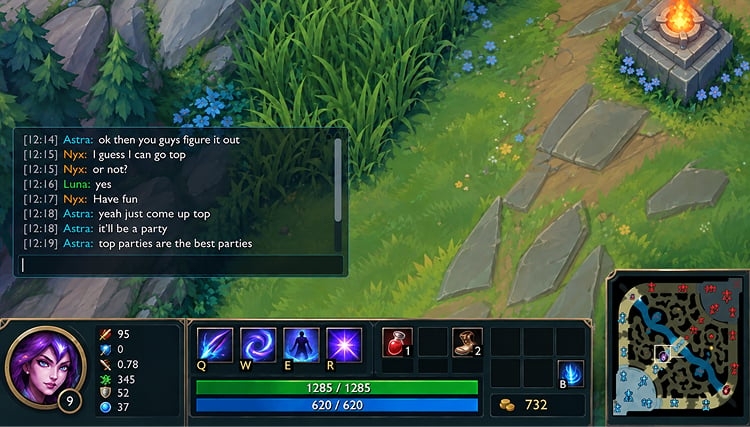
For most online gamers, a local gaming community is a must-have part of the experience. They give gamers a way to socialise, team up, and vent their frustration with other gamers who share their passion for the same titles. That’s why apps like Discord are so popular. But since Discord is a third-party app, game publishers and studios find it is better to have their own in-game chat, in which their audiences stay together within the perimeter of the game, talking to teammates while playing, matchmaking, or spectating, without using a separate app. That’s where the in-game chat vs Discord conversations start.
For game studios and publishers, deciding where to focus community-building efforts (in-game chat, Discord, or both) is crucial to keeping engagement and retention high. This article walks through each option and lays out a practical framework for deciding where gaming communication or player community should live.
Why do people (end-users) like Discord?
This question was asked by users themselves many times on Reddit—community once, community forever—and continues to be asked as the platform continues its growth. Within the most repetitive answers, several patterns and repetitive reasons for users' loyalty are especially visible:
- It has a super low barrier for entry
- It scales up limitlessly
- It's easy to use and set up, with multiple ways to use it (website, desktop, phone app)
- It looks very slick and is astoundingly well designed
- It's completely free.
And this answer describes the reason quite well and fully: “It has a lower barrier-to-entry for users to jump directly into the conversation both over text or voice; all you need is an account, the join code, and a web browser. It also does not have an indirect cost to start your own communities.”
Discord grows continuously: while in 2016 it was 25 million, in 2025 it was 656 million users.
But these answers are received not just from the gaming community but from any Discord users, and of course people around the globe try to find cheap and convenient ways to communicate. While Discord is free of charge for regular users, it is an obvious way to jump into talks there, not just during the process of the game, but for work meetings, studies, or any other type of calls. So, among all these impressive numbers describing the Discord audience (656 million registered users and 259 million monthly active users; According to GWI, just two community-led channels are more popular than Discord: TikTok and Telegram), the gaming community holds a high place but not a unique one.
Newzoo's Global Games Market Report puts the worldwide player base at roughly 3.6 billion people, generating $188.8 billion in game revenue in 2025 alone, while the Entertainment Software Association's (ESA) 2025 Essential Facts survey found that 89% of players aged 8–90 have played games online, and 55% play with others weekly. Playing with others is an almost necessary part of the gaming process today.
Can a gaming chat compete with Discord: A quick review
In-game chat is a built-in communication feature in multiplayer games that can include team chat, party chat, lobby chat, guild/clan channels, and private messages so players can easily talk to each other while they are in the game. All communication is authenticated against the player's actual game identity. And since it’s a built-in feature, it automatically detects which match, server, or session the player is currently in.
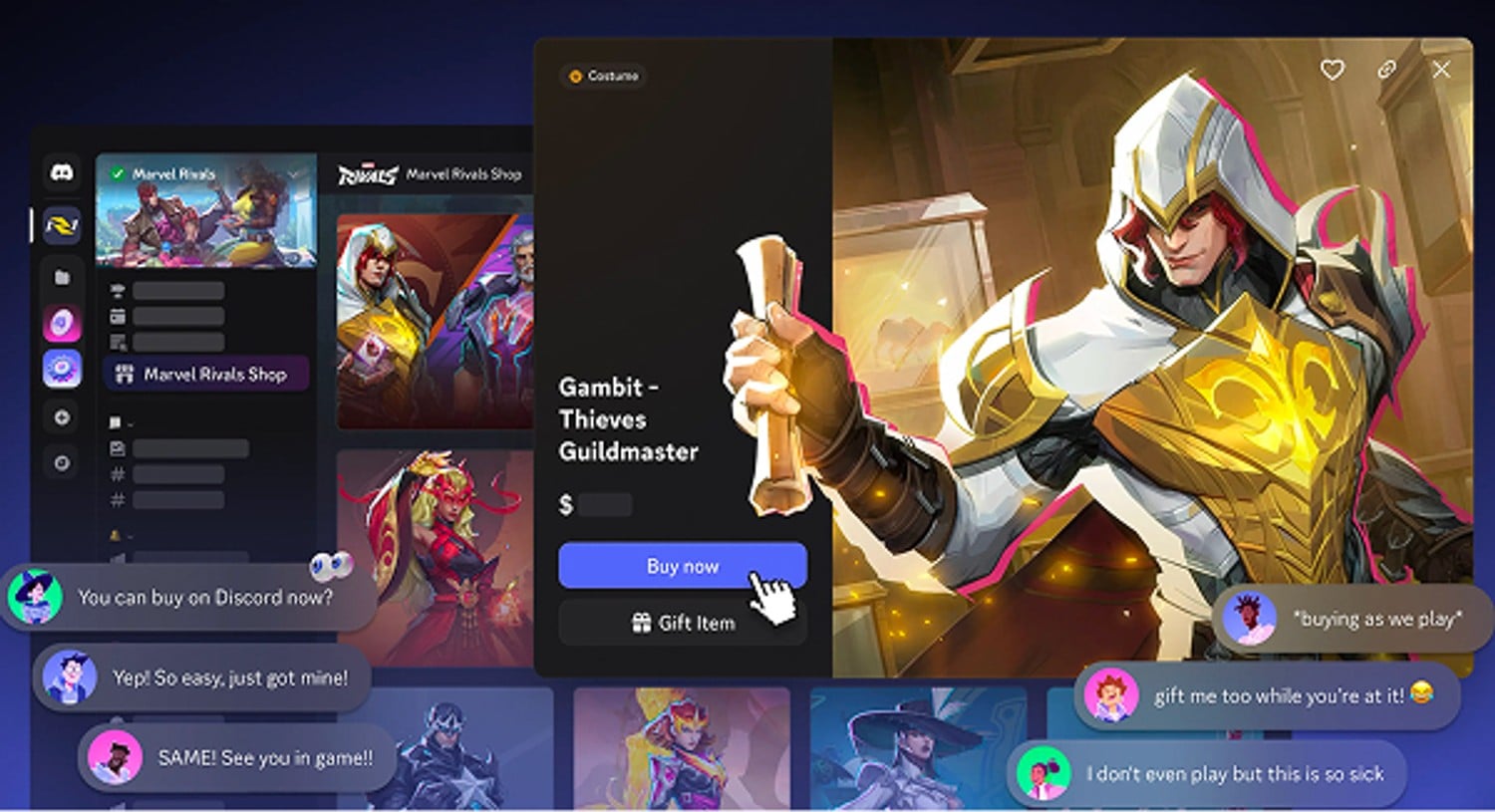
Discord offers an opportunity for communities and companies to hold their own hubs and servers, so many games and game communities have such hubs: Discord even offers something like a hub menu where users can find the hub they want to join. There are verified official hubs, like Marvel Rivals for instance, Stumble Guys, or Roblox (this one even officially partners with Discord to provide their players the official place for online hanging out), or unofficial hubs but still huge—for instance, Blade Ball with eight hundred thousand participants, with 80 thousand constantly online, or Call of Duty. What does it mean for games? On the one hand, everything looks more than sufficient and convenient—users have Discord on their phone or laptop while playing. On the other hand, when you send your user to Discord, their choice is too broad. Maybe they decide to switch between games, and instead of your gaming server, they pick Marvel Rivals?
Also, Discord hubs don’t have a direct connection with the game. Thousands of people is great, but what is it about people who are really playing right now when in-game chat is something that is internal to gameplay, so communication is happening between game mates?
ESA 2024 Essential Facts survey found that 70% of adults who play games online have used in-game text or voice chat to communicate with other players.
Why the in-game chat vs Discord decision matters now more than ever
In-game chat was essential for team coordination in multiplayer games like Call of Duty, Halo, and World of Warcraft even 15 years ago, and it helped build online gaming communities. So, it is possible to say that services like Discord were inspired by the process of gaming while communicating. Not all games had internal tools for communication, and to break this loneliness and silence in-game, external hubs were built.
But back then, the social layer wasn’t the necessary part of any platform or any app; it was a second screen time, and Discord, as a second-screen option to the main game screen, was the great solution. As gaming has become more social, as any other online entertainment, developers and publishers face a dilemma—should they make conversations happen inside the game or outside, on Discord, or somewhere else? Or maybe both?
For many successful multiplayer games like Fortnite, VALORANT, and League of Legends, communication is a core part of the experience, just like matchmaking and progression. In many cases, only a fraction of an individual game's total player base ever joins its official Discord server. Fortnite is a good example: its official Discord server has roughly 1.9 million members, while, according to Epic, Fortnite had more than 100 million active players and creators in 2024. No chat can combine 2 or 100 million users in meaningful conversation, but the difference between Discord and in-game chat here is the real-time activity of people gathered around.
The second biggest advantage of in-game chat is that players don't have to have this second screen option, which gives users a number of benefits:
- No context switching
For many gamers, the most frustrating part of relying on external servers is that they usually have to leave the game, run and authenticate a second app alongside it, and juggle two audio streams (game sound and voice chat) through separate volume controls. Also, if there is a generic server, not the small one created just for teammates, context is different for games; they proceed with different challenges and have their own stories happening right now.
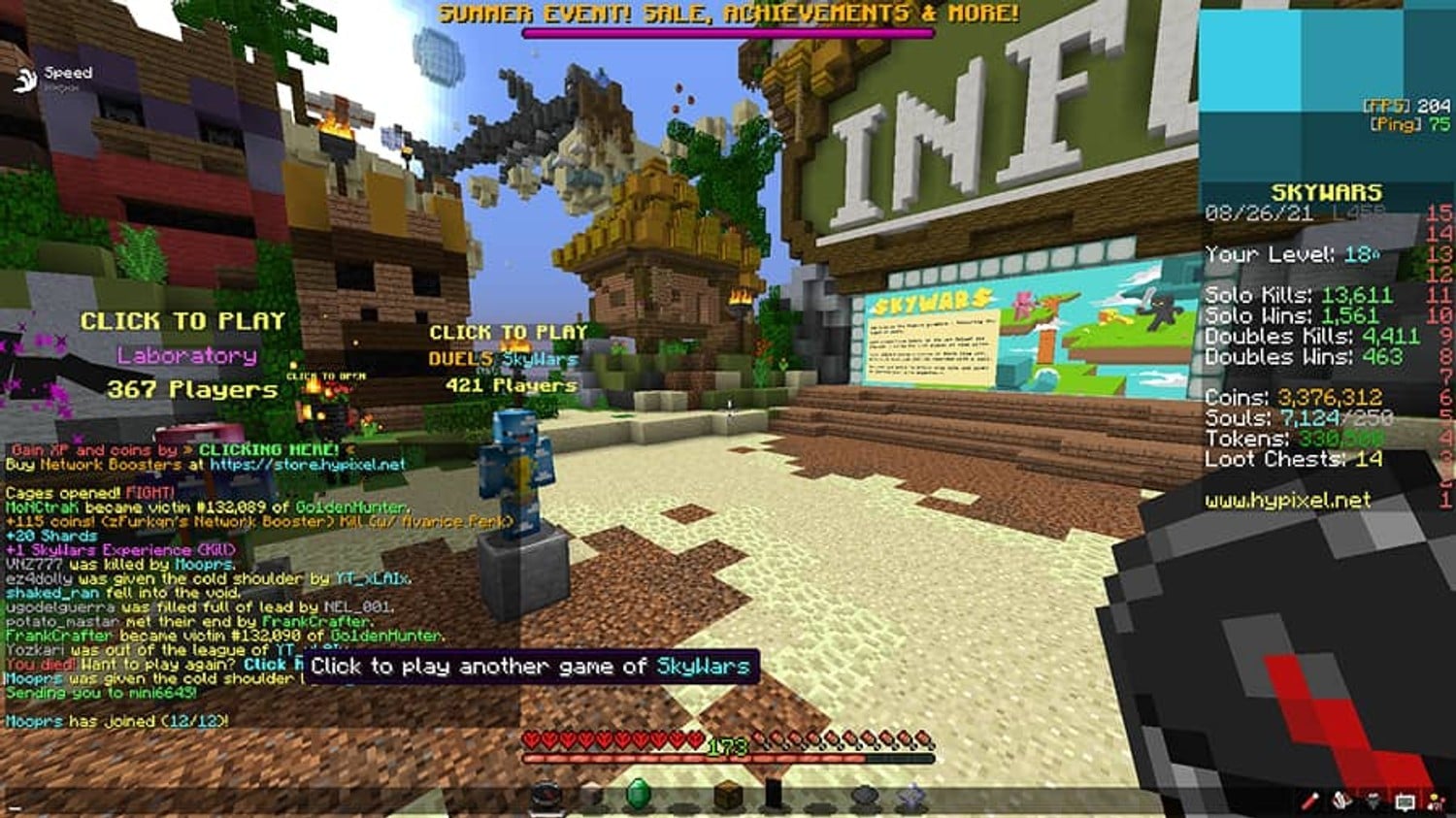
While Discord provides an in-game overlay so players don’t have to switch between apps, users still complain about lowering game audio to hear Discord, adjusting separate app volumes, and repeatedly switching levels. They also often have to find and join the right Discord channel before they can coordinate with their teammates.
With in-game chat, communication happens in the same window, using the same login. And the player also doesn’t have to manage two separate apps and volume controls mid-session. For anything time-sensitive, like a defuse call, a raid pull, or a trade negotiation before an auction closes, the game that doesn't force a context switch demonstrates a real advantage.
- Directly connected with gameplay
In-game chat is built or integrated by the same developers that build the game, so they definitely understand things like what map you're on, what round it is, who's alive, and what item you just picked up. The ping system in Apex Legends is a good example of this kind of contextual communication. The system analyses the player's aim and the surrounding game context and lets players instantly share tactical information, like sighting an enemy or a suggested destination, without typing anything. The same can happen with the chat—something happens in games—a webhook is transferred—users see an in-chat widget or notification.
- Built-in game identity and authentication which improve trust
Every message sent through in-game chat is tied to a verified player account, which is the same one used for matchmaking, progression, and purchases. There's no separate sign-up flow or verification step. This also simplifies moderation. A ban from chat due to foul language can be tied directly to the user account, as opposed to a Discord user ID that a banned player can simply abandon and recreate under a new name.
- Contextual channels
That Match the Structure of the Game In-game chat can reflect the actual shape of play in a way a generic server structure can't. A game can distinguish between communication with a pre-made party and communication with the teammates you're currently playing alongside. For example, Fortnite's Party Channel lets players talk to others in their party, while Game Channel connects players on the same team, even if they're in different parties. Because these channels are built in the game, players can start communicating right away instead of having to find a separate community or set up those connections themselves.
- Publisher-controlled UX
When chat is part of the game, the studio or publisher controls every pixel of how it looks and interacts with the rest of the interface. Colours, typography, overlay behaviour, controller navigation, accessibility settings, and even how notifications interrupt (or don't interrupt) active gameplay are customisable or built-in.
On an external platform like Discord, a studio is a third party. UI changes, feature deprecations, and policy updates happen on Discord's schedule, not the game's, and there's no way to guarantee visual or functional consistency with the rest of the game's brand. If you use Discord, you know everything about waiting for the update to set up.
- First-party interaction data
This is arguably one of the most commercially significant differences between having an in-game chat and relying on a third-party platform like Discord. When communication happens inside the game, the studio can analyse how communication correlates with retention, churn, monetisation, and toxicity. The studio sees their players as they are and can get what these players want and what they think about the game. That’s because it's the studio's own data, generated on its own infrastructure.
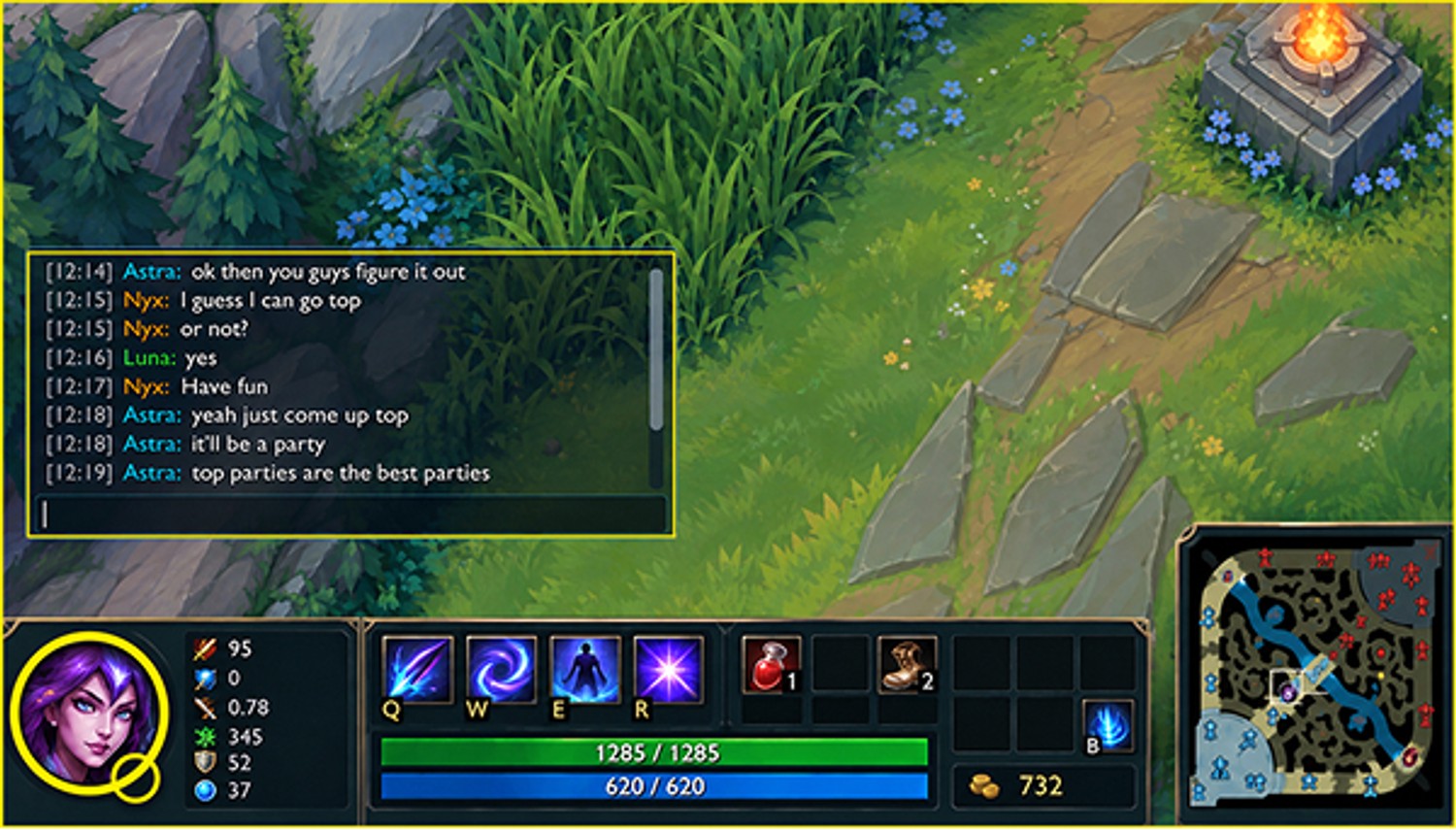
When communication happens on Discord, or any other external platform, social media, or messenger, this valuable data stays with the external platform. For any game studio that wants to understand what drives engagement, or catch toxicity before it drives players away, first-party interaction data is a goldmine.
- Integrated, controlled, and adjustable moderation
Because in-game chat is tied to a player's game account, studios can see chat behaviour in the context of the player's wider activity. Moderation can also use a player's report history and in-game behaviour to give the studio a fuller picture of what is happening, rather than looking at a single chat message in isolation. Users can be banned from communication or from the game in general, which doesn't work similarly with external services. Also, Discord, like any third-party social network, has its own moderation system and procedures that cannot be influenced by the community or even by the game studio.
- Consistent communication across platforms
Cross-platform play is now common as players on consoles and PC increasingly play together regardless of their hardware. Studios have also introduced features for cross-platform play, such as shared matchmaking, friends lists, and progression. In-game chat can help tie that experience together by giving players a consistent way to communicate, without requiring them to switch between different platform-specific communication systems and connect all these features with an in-chat profile.
A console player without a Discord account or without easy access to voice chat outside the game can still coordinate fully with PC teammates, because the chat lives inside the game.
Why is Discord doing well?
An enormous user base
Discord's pull for gaming communities isn't accidental; it's the product of roughly a decade of purpose-built design decisions. Studios that lean on it are usually optimising for one thing above all: speed to community, without having to build the infrastructure themselves.
Discord's own public statements put the platform at more than 200 million monthly active users worldwide. For a new or mid-sized game, that's not a community you're building from scratch. It's a pool of players who already have an account and already know the interface. When a new game is established, sometimes it is not so easy to gather many people for internal in-game communication.
At the same time, this challenge, when solved, helps the studios find a real audience for their games because players invite other players. When players invite other players to a Discord server, it doesn't influence the audience volume for the game.
Lasting communities
A Discord hub doesn't disappear when a game finishes. Players can share future plans and chat with each other constantly, even about the game. This can be helpful for live-service games during breaks between seasons or quieter periods. Even when there's little happening in the game, the community can keep the conversation going and give players a reason to stay connected.
In-game chat can compete with this advantage by creating an in-game profile. If users follow each other inside the game, the community stays stable and growing, and players aren't afraid to lose connections with game mates.
An external ecosystem of bots, tools and integrations
Because Discord is a general platform rather than a single-purpose one, it has an enormous surrounding ecosystem, including moderation bots, tournament brackets, role-assignment tools, LFG (looking-for-group) systems, and Rich Presence integrations that show what game and even what in-game activity a friend is currently doing.
Game studios that don't want to build and maintain that tooling in-house can plug into an ecosystem that already exists, is actively maintained by third parties, and improves independently of the studio's own release cycle. On the other hand, studios don’t see the direct beneficial influence on the game.
Internal game chat vs Discord: A side-by-side comparison
| In-game chat | Discord | |
|---|---|---|
| Player identity | Tied to verified game account | Separate account, manually linked or verified via bot |
| Context awareness | Knows match, session, map, team in real time | No native awareness of gameplay state |
| Onboarding friction | Zero: chat is already inside the client | Requires joining a server, verifying identity |
| Persistence | Typically scoped to session, party, or guild, but can be held with the profile system | Persistent regardless of whether the game is running |
| Existing user base | Built from zero | Huge active user base already onboarded |
| UX and branding control | Fully controlled by the studio | Constrained by Discord's own interface and roadmap |
| Moderation tools | Can act on accounts, matchmaking rank, and gameplay behaviour together | Limited to what Discord (or a fan-run server's moderators) enforces |
| First-party data | Fully owned by the game owners | Largely invisible to the studio, owned by Discord |
| Engineering and safety investment required | Significant, ongoing (build) or moderate (SDK/API) | Zero: the platform already exists |
Why games can benefit from both ways
The games that handle player communication best usually assign each platform to the job it's actually good at rather than trying to make one tool do everything. For example:
- In-game chat can handle anything time-critical and session-scoped, such as team callouts, party coordination, matchmaking-lobby banter, and trade negotiations
- Discord can handle anything that needs to persist beyond sessions, such as guild recruitment, fan art, tournament organisation, and long-running strategy threads.
- In-game moderation can connect player identities and game accounts to reports and enforcement actions, giving studios more context when dealing with harassment, spam, or other harmful behaviour.
- Discord helps to reach new audiences and promote the game beyond an existing community.
The two can also work together by giving players a natural way to move from in-game interactions to the wider community. For example, a player might meet a few teammates through in-game chat and later join the game's Discord server to keep in touch and play together again.
Importance of moderation
According to the Anti-Defamation League 2023 survey, around 75% of young players (aged 10–17) had experienced harassment while gaming, while 76% of adult players also faced harassment. Harassment based on identity was also common. 48% of women said they had been harassed because of their gender. A separate, more targeted piece of ADL research published in January 2025, which tested actual gameplay sessions using usernames associated with different religious, ethnic, and national identities, found hate and harassment present in almost half of the online sessions tested.
These numbers matter to the Discord vs. in-game chat question because they point in both directions. A studio that builds in-game chat inherits full responsibility for moderating it, but it also gains important tools (account-tied bans, gameplay-behaviour correlation, automated detection at the platform level) to act on in-game chat moderation directly. When they hold Discord servers, they lose control over the rule-breakers.
A studio that relies entirely on Discord doesn't make harassment disappear. Rather, much of that moderation simply happens on another platform. The trade-off is that the studio has less direct visibility and control over those conversations, including identifying abusive players and deciding how to respond to their behaviour.
At Watchers, we provide a solid moderation system together with our in-game social tools that allow your players to communicate in a safe space. Moderation is fully adjustable for your needs and the specifics of your audiences and game.
FAQs
Is in-game chat better than Discord?
There is no such thing as better: the best choice depends on what you want your community to do and how it should develop. In-game chat is best for real-time, game-focused communication. Discord, on the other hand, helps you promote a game to new audiences, reach new players, and allows you to organise activities outside the game.
Why do some games build their own chat instead of using Discord?
In-game chat gives studios more control over the communication experience and moderation. It also lets players communicate without leaving the game or joining an external platform.
Can a game use both in-game chat and Discord together?
Yes, many game studios use both. In-game chat is great for real-time communication and retention, while Discord is good for persistent community discussions, events, and other activities outside the game, and reaching new audiences.
How common is toxic behaviour in gaming, and does it affect the choice?
Toxic behaviour in gaming is quite common, making moderation and game chat safety crucial to consider when choosing a communication approach. In-game chat gives studios more direct control, while Discord shifts much of the moderation to the external platform.
References
- In-Game Chat: Key Features and Implementation Guide
- Gaming interface: Glossary
- Newzoo’s Global Games Market Report
- America plays—and plays together: ESA Report 2024 Essential Facts About the U.S. Video Game Industry: ESA Report
- Fortnite’s official Discord server
- Disney and Epic Games to Create Expansive and Open Games and Entertainment
- Universe Connected to Fortnite | Epic Games
- How to play Apex Legends™ as a beginner | EA Help
- In-Game Chat: Key Features and Implementation Guide Discord IPO 2026: 200M Gamers, $8.5B Valuation
- Hate is No Game: Hate and Harassment in Online Games 2023
- Talking, Teaming, and Thriving: How In-Game Chats Affect Players’ Experience
Boost your platform with
Watchers embedded tools for ultimate engagement


