Eight GetStream Alternatives in 2026: How to Choose The Most Suitable One
Looking for a GetStream alternative? Compare Watchers, Sendbird, CometChat, TalkJS and more to find the best chat and community platform for your app.



Why teams look for Stream alternatives
Stream (also known as GetStream) is one of the most popular platforms for adding real-time community chat, activity feeds and in-app community features to web and mobile applications. Rather than building messaging infrastructure from scratch, product teams can use Stream's APIs and SDKs to launch chat and social features much faster.
For many products, Stream remains a strong choice. It's particularly well suited to startups that need to validate an idea quickly, as well as teams that want reliable real-time messaging without investing significant engineering resources into backend infrastructure. Its developer tools, SDKs and managed infrastructure help reduce development time and ongoing maintenance.
However, some time after the launch, many product teams start to look for alternatives. The trade-off that makes Stream attractive early on can become less compelling as user numbers grow, feature requirements become more complex, or budgets come under greater scrutiny.
Some of the most common reasons teams switch away from GetStream include:
- Rising costs at scale. Like many similar products, Stream's usage-based pricing can increase rapidly as applications gain more users, messages and media uploads. While this is often still cheaper than building a chat platform in-house, many teams find that the long-term cost becomes difficult to justify, particularly for startups and pre-revenue products.
A review on G2 noted: “The pricing is far higher than what seems reasonable for most use cases. As your user base expands, the costs increase at an unreasonable rate. It gives the impression that the platform is designed primarily for enterprises unconcerned with budget limitations. The dashboard is quite basic, the analytics offer little value, and after the initial months, the overall value simply doesn't match the price.”
- Greater customisation requirements. Stream provides polished UI components that accelerate development, but teams with highly customised user experiences or complex business logic may find themselves replacing much of the pre-built interface with custom implementations.
Several reviews mentioned the problem with Figma UI kits and not too direct and convenient information about new features and functionalities, and their usage: “Stream could do a bit better providing a changelog between version upgrades that would make it a bit easier.”
- Data hosting and compliance requirements. Because Stream is a fully managed cloud service, it may not meet the needs of organisations that require on-premises deployment, strict data residency controls or industry-specific compliance standards.
- Advanced moderation and community management needs. Products with large public communities can require more sophisticated moderation workflows, flexible permissions or custom trust and safety features than Stream offers out of the box.
- Platform limitations and ecosystem gaps. Some developers report incomplete feature similarity across platforms or challenges keeping up with version changes and newly released functionality.
8 GetStream alternatives to consider
Watchers
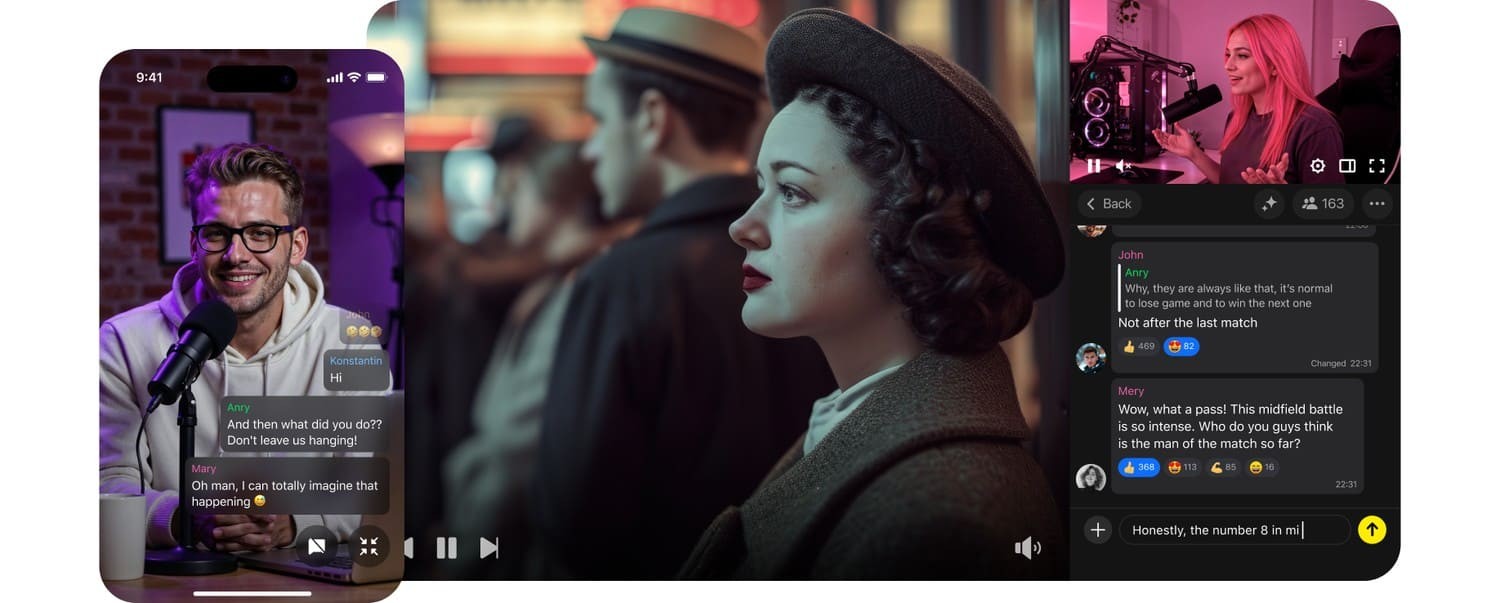
Watchers is a SaaS platform for building in-app communities, engagement and interactive content. In addition to community chat, it includes a wide range of features, such as an AI sports assistant, audio and video live streaming, engagement and marketing widgets, moderation tools, analytics and AI-powered semantic analysis of user-generated content.
The Watchers platform can be integrated with any website or mobile app. The company uses a WebView-based approach, helping teams to add new features without waiting for store release cycles. This significantly reduces efforts and resources spent, and saves the user experience consistent across various platforms.
Pros
- Fast integration. Watchers can be integrated into existing platforms quickly without complex technical requirements or lengthy development cycles.
- Rich engagement toolkit. The platform offers a wide range of industry-specific widgets and community features designed to increase user engagement, retention and monetisation.
- Strong customer support. Customers often highlight in reviews the responsiveness of the support team. Beyond resolving technical issues, Watchers works closely with clients on feature requests and implementation guidance.
- Built-in analytics and AI tools. The platform includes moderation, semantic analysis of user-generated content and performance analytics without requiring additional third-party services.
- Highly developed moderation system, which includes a scope of strong AI tools for text and images.
Cons
- No native SDKs. Watchers uses WebView rather than platform-specific SDKs. While this simplifies deployment and reduces maintenance, organisations requiring deep native customisation may prefer an SDK-based solution.
- Live video costs. Embedded live streaming is straightforward to deploy, but large-scale in-chat video streaming can become more expensive as the number of concurrent viewers increases.
Best for:
Sports, media and entertainment platforms, as well as businesses looking to launch an engaged in-app community quickly with built-in engagement, moderation and analytics features.
Sendbird
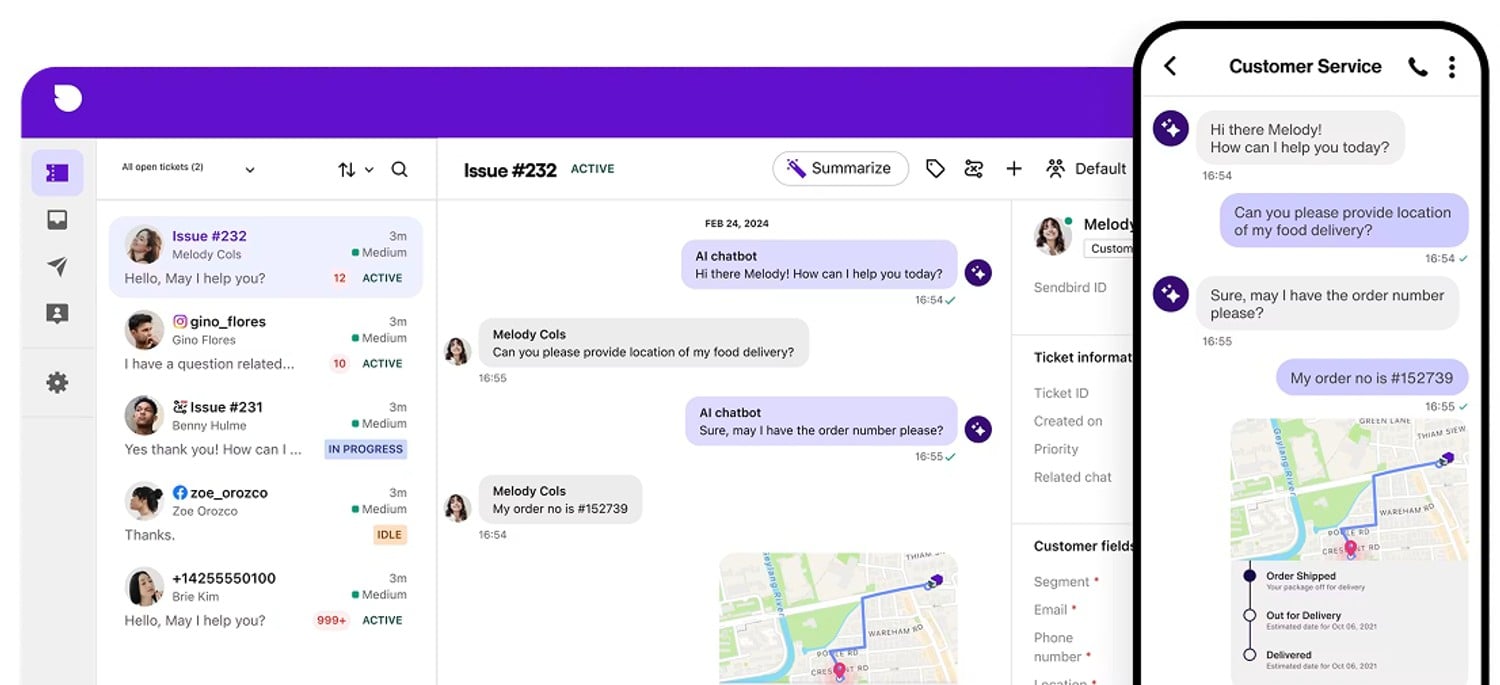
Sendbird was a pretty popular alternative for chat integration and other engagement facilities. Sendbird offers APIs and SDKs for chat, voice, video and AI-powered customer interactions. Like Stream, it provides managed infrastructure that allows development teams to add real-time communication features without building and maintaining their own backend. The platform is particularly popular with marketplaces, healthcare applications, social platforms and customer support products that need reliable messaging at scale. Sendbird also offers extensive moderation tools, user management and enterprise-grade security features, making it a common choice for larger organisations.
Pros
- Mature APIs and SDKs for iOS, Android, JavaScript, React Native, Flutter and Unity. Supports chat, voice and video within the same ecosystem.
- Strong moderation capabilities, including profanity filtering, user bans and message moderation. Enterprise-focused security, compliance and reliability.
- Highly scalable infrastructure suitable for applications with millions of users. Good documentation and developer resources.
Cons
- Premium pricing can become expensive as usage grows, making it less attractive for startups and smaller products.
- Customisation beyond the provided UI components may require significant development effort. Some advanced features are only available on higher-tier plans. The platform can feel overly complex for teams that only need basic chat functionality.
- Analytics and administration tools are primarily geared towards enterprise customers rather than smaller product teams.
Best for:
Enterprise applications, marketplaces, healthcare platforms and customer-facing products that require scalable messaging, strong moderation and compliance features.
Sendbird Alternatives: 7 Solutions to Consider in 2026
Ably
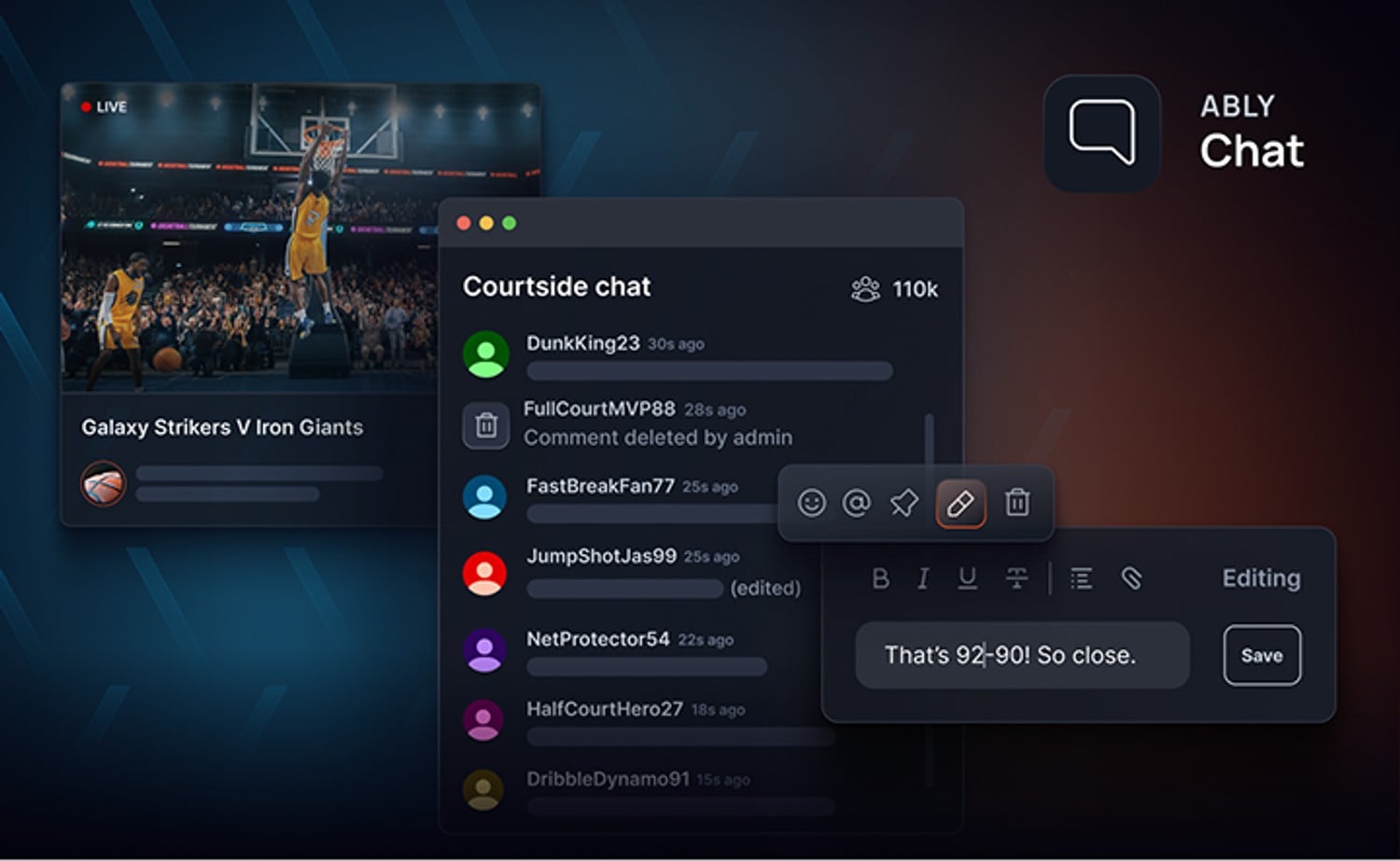
Ably is a real-time messaging platform that provides the infrastructure for live data synchronisation, messaging and event delivery. Unlike GetStream, Ably is not a complete chat solution with ready-made UI components. Instead, it offers APIs that developers can use to build highly customised real-time applications, including chat, live collaboration tools, multiplayer experiences and IoT products.
Because it focuses on the underlying infrastructure rather than end-user features, Ably gives engineering teams more flexibility but also requires significantly more development work to create a production-ready chat experience.
Pros
- Reliable real-time infrastructure. Designed for low-latency messaging with high availability and global scalability. Highly customisable. Developers have full control over the user experience, business logic and backend architecture.
- Excellent documentation and APIs. Well-documented SDKs support JavaScript, React, Flutter, Android, iOS and many other platforms.
- Strong scalability. Suitable for applications with large numbers of concurrent users and high message volumes. Broad use cases. Can power chat, live updates, collaborative editing, location tracking and other real-time features beyond messaging.
- Good support that helps to solve most of the issues.
Cons
- Not a complete chat platform. Unlike GetStream, Ably does not provide built-in chat UI, moderation tools, user management, or community features out of the box.
- Higher development effort. Teams need to build many application-layer features themselves, increasing implementation time and maintenance costs.
- Limited community functionality. Features such as feeds, reactions, moderation workflows and engagement tools require additional development or third-party services.
- Costs can increase with usage. Pricing is based on message volume, connections and data transfer, which may become expensive for applications with heavy real-time traffic.
Best for:
Engineering teams that want maximum flexibility and are prepared to build a custom real-time communication platform rather than relying on a ready-made chat solution.
TalkJS
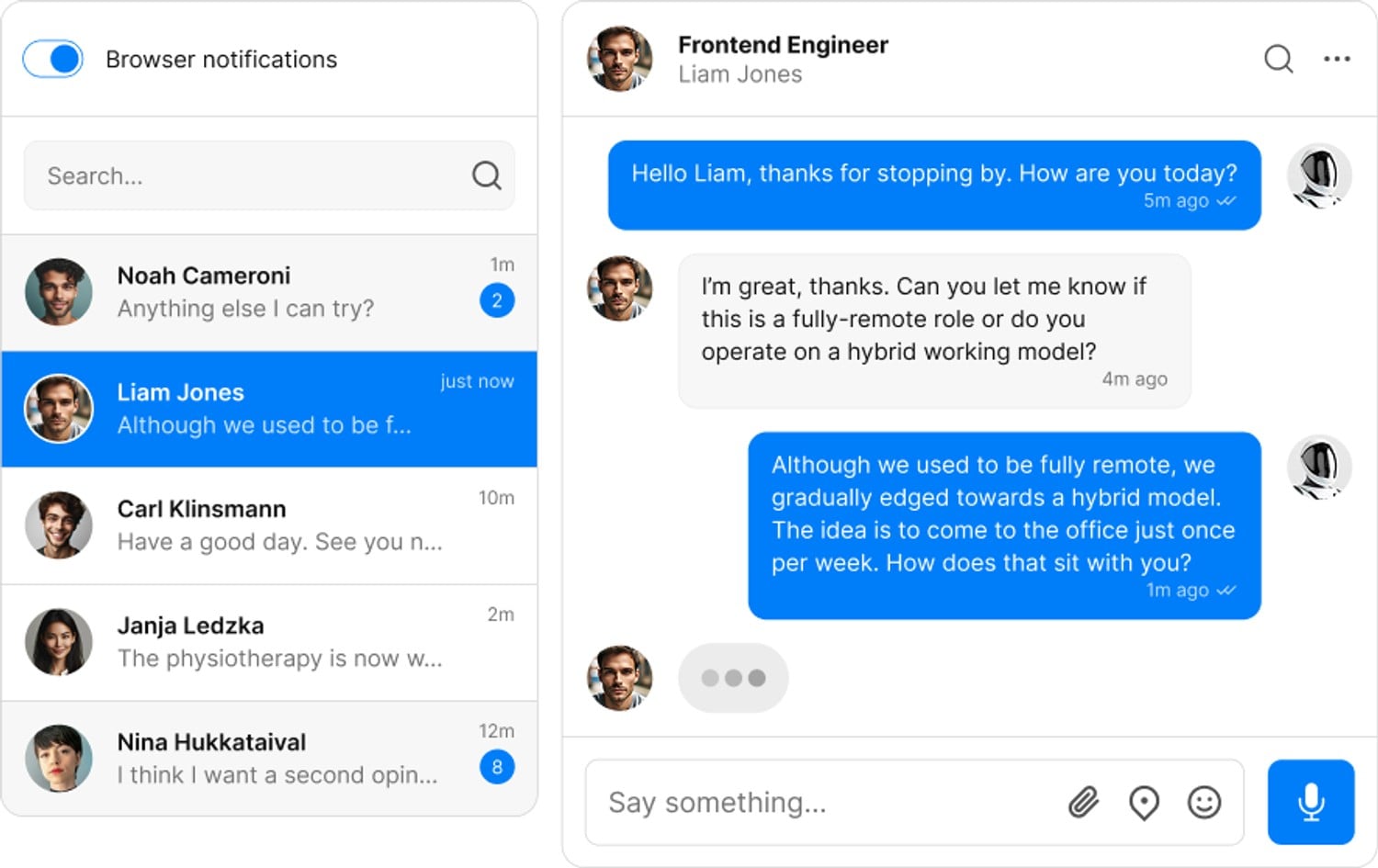
TalkJS is a chat API and embeddable messaging platform designed to help developers add one-to-one and group conversations to web and mobile applications with minimal development effort. Unlike infrastructure-focused platforms such as Ably, TalkJS includes a ready-made chat interface that can be customised to match a product's branding, making it one of the quickest ways to launch in-app messaging.
The platform is particularly well suited to marketplaces, SaaS products, CRM systems and collaboration tools where messaging is a supporting feature rather than the core product.
Pros
- Fast implementation. Pre-built chat UI enables teams to launch messaging features quickly with relatively little development work.
- Easy customisation. The interface can be tailored to match your application's branding without rebuilding the entire chat experience.
- Developer-friendly APIs. Well-documented SDKs and REST APIs simplify integration with existing applications. Reliable messaging features. Supports one-to-one chats, group conversations, file sharing, typing indicators, read receipts and notifications out of the box.
- Lower development overhead. Most common chat functionality is included, reducing the need to build and maintain custom messaging infrastructure.
Cons
- Limited community features. TalkJS focuses on messaging and does not include activity feeds, community management, engagement tools, or moderation features comparable to GetStream.
- Less flexibility for complex use cases. Teams with highly customised workflows or advanced business logic may find the platform restrictive. No built-in voice or video. Real-time audio and video calling require third-party integrations.
Best for:
SaaS platforms, marketplaces and business applications that need polished in-app messaging without the complexity of building a chat system from scratch.
MirrorFly
MirrorFly is a communication platform that provides APIs, SDKs and self-hosted solutions for chat, voice and video. Unlike fully managed services such as GetStream, MirrorFly allows organisations to deploy either on their own infrastructure or in the cloud, making it a popular option for businesses with strict security, compliance or data residency requirements.
The platform offers extensive customisation and supports a wide range of messaging features, but implementing and maintaining the solution typically requires more technical resources than SaaS-first alternatives.
Pros
- Self-hosted deployment available. Organisations can host the platform on their own infrastructure to meet security and compliance requirements.
- Comprehensive communication features. Supports one-to-one and group chat, voice and video calls, file sharing, push notifications and end-to-end encryption.
- High level of customisation. Developers have considerable control over the user experience, workflows and backend integrations.
- Wide platform support. SDKs are available for Android, iOS, Flutter, React Native and web applications.
- Suitable for regulated industries. Self-hosting makes MirrorFly an option for healthcare, finance and government organisations.
Cons
- More complex implementation. Setting up and maintaining the platform requires greater engineering effort than fully managed SaaS solutions.
- UI components are less polished. Teams may need additional frontend work to achieve a modern user experience.
- Higher maintenance costs. Self-hosted deployments require ongoing infrastructure management, monitoring and updates.
- Limited built-in community features. While MirrorFly excels at messaging and calling, it offers fewer engagement, moderation and community-building tools than platforms focused on social experiences.

Best for:
Organisations that require self-hosted messaging, strong security and extensive customisation, particularly in regulated industries or enterprise environments. Here's a section for Sceyt, following the same format and neutral tone as the other alternatives.
Sceyt
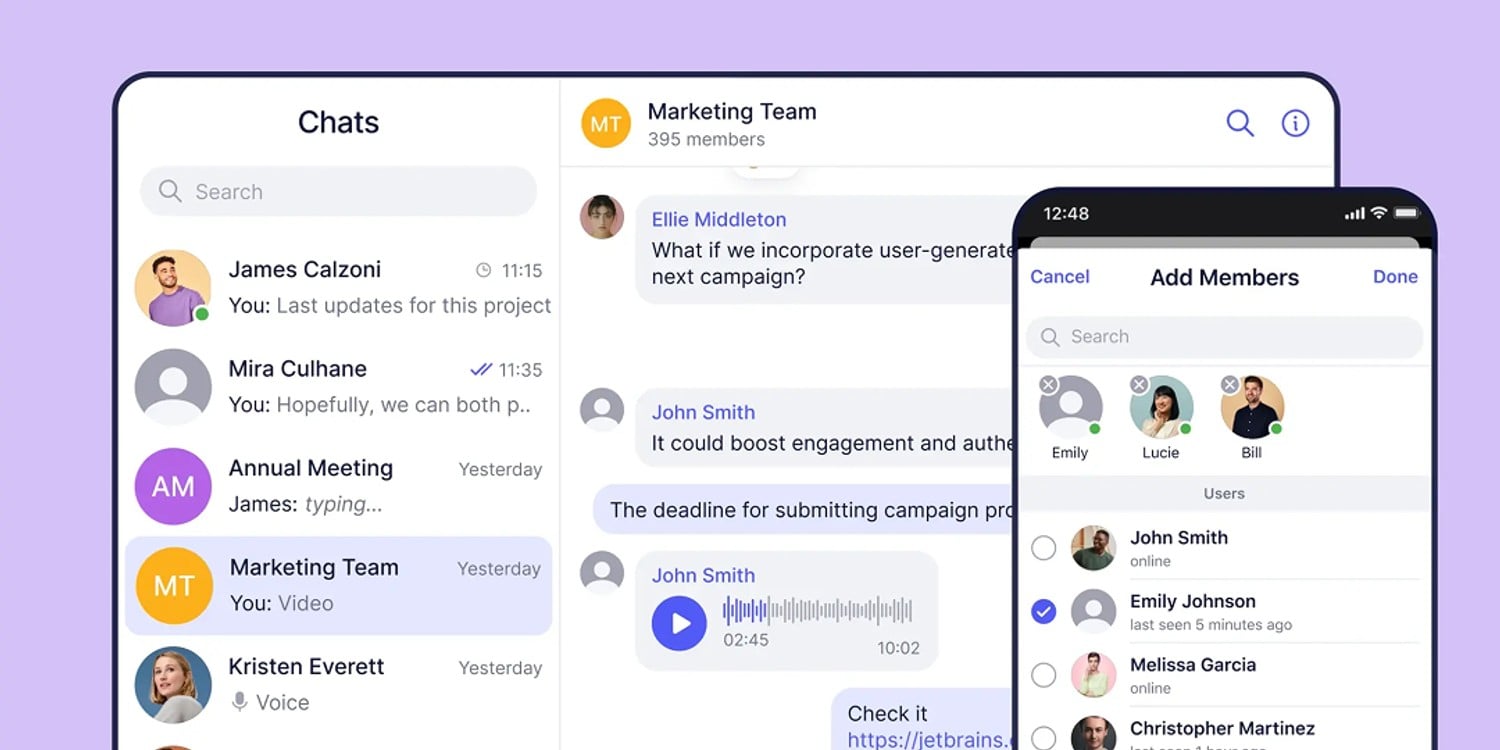
Sceyt is a real-time messaging platform that provides APIs and SDKs for adding chat to web and mobile applications. Designed with developers in mind, it offers the core infrastructure needed to build one-to-one and group messaging, along with features such as message reactions, threads, file sharing and moderation tools.
Compared with GetStream, Sceyt focuses on providing a flexible chat foundation rather than a broader community platform. It offers extensive customisation options while keeping implementation relatively straightforward through its SDKs and pre-built UI components.
Pros
- Developer-friendly SDKs. Supports Android, iOS, Flutter, React Native, JavaScript and other popular frameworks. Comprehensive messaging features. Includes group chat, threads, reactions, typing indicators, read receipts, file sharing and push notifications.
- Flexible customisation. Developers can customise both the UI and backend behaviour to fit specific product requirements.
- Moderation and administration tools. Provides user management, message moderation and access controls for community and business applications.
- Scalable infrastructure. Designed to support growing user bases and high message volumes.
Cons
- Smaller ecosystem. Sceyt has a smaller user community and partner ecosystem than more established platforms such as GetStream or Sendbird.
- Fewer advanced community features. The platform focuses primarily on messaging and offers fewer built-in engagement tools, activity feeds and social features.
- Limited third-party integrations. Compared with larger competitors, there are fewer out-of-the-box integrations with external services.
- Less market maturity. As a newer platform, it has fewer case studies, tutorials and community resources available, — reviews complain about an absence of documentation.
Best for:
Product teams looking for a modern, customisable chat platform with strong developer tools but without the complexity or cost of larger enterprise communication platforms.
How to Grow User Engagement and Why You Should: Proven Strategies for Retention and Growth
PubNub
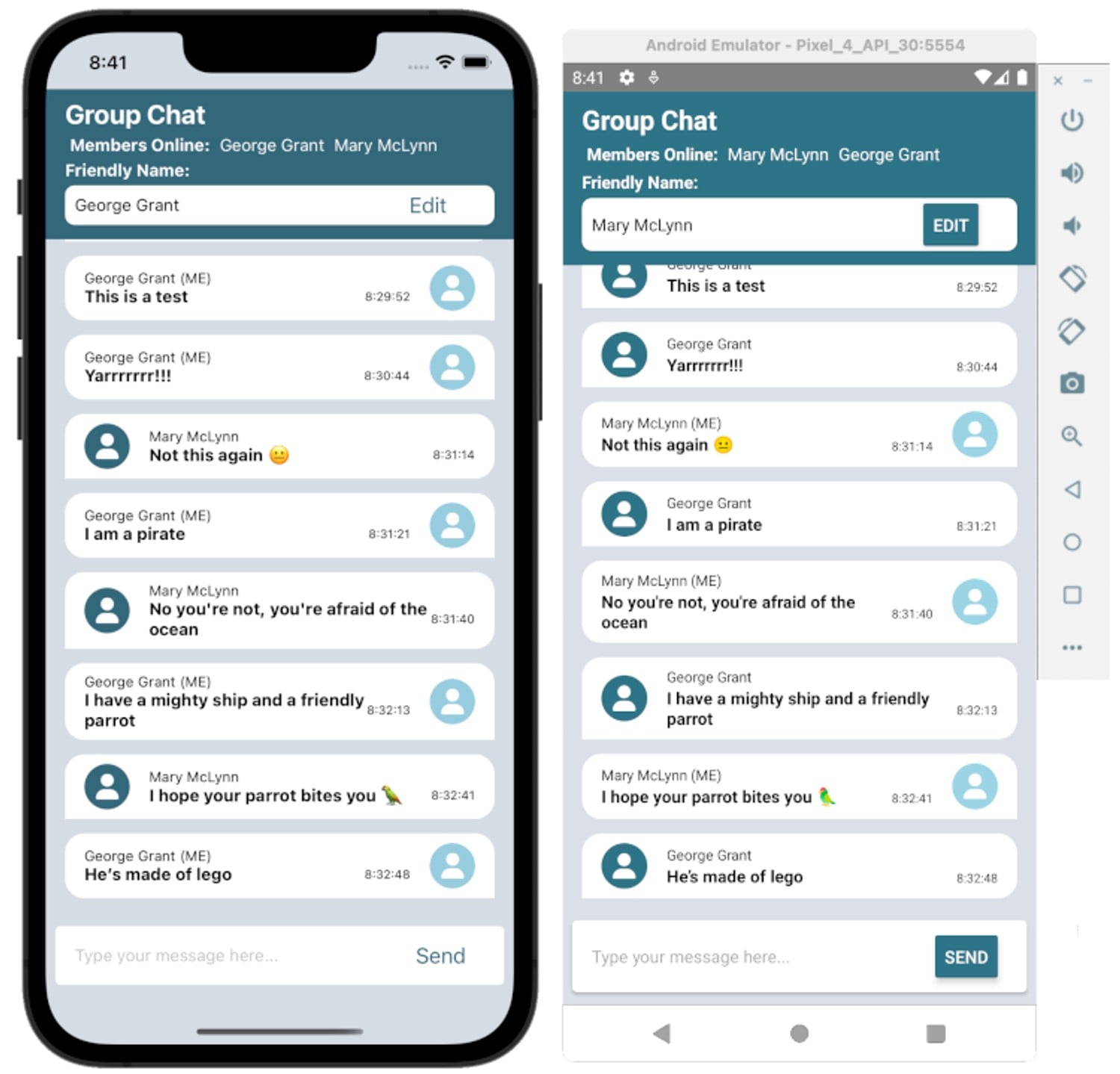
PubNub is a real-time communication platform that provides the infrastructure for chat, live updates, presence, push notifications and event streaming. Like Ably, it is an infrastructure-first solution rather than a complete chat platform, giving developers the building blocks to create highly customised messaging experiences.
The platform is widely used for applications that require low-latency communication, including social apps, live events, logistics, gaming and IoT products. While PubNub offers optional chat SDKs and pre-built components, teams are still responsible for implementing much of the application logic themselves.
Pros
- Highly scalable infrastructure. Built to support millions of concurrent users and large volumes of real-time messages.
- Low-latency global network. Delivers reliable real-time communication across multiple regions.
- Flexible APIs and SDKs. Supports web, iOS, Android, Flutter, React Native, Unity and many other platforms.
- Broad real-time capabilities. In addition to chat, PubNub supports presence, live location tracking, event streaming and push notifications.
- Strong developer documentation. Extensive documentation and sample applications help speed up implementation.
- Requires more development work. Unlike GetStream, PubNub does not provide a complete community platform with ready-made moderation, engagement or social features.
- Limited out-of-the-box UI. Teams typically need to build or heavily customise the user interface.
- Complex pricing model. Costs are based on usage metrics such as transactions and data transfer, making long-term expenses harder to predict.
- Not community-focused. Features such as activity feeds, content moderation and engagement tools generally require additional development or third-party services.
Best for:
Engineering teams building highly customised real-time applications that require scalable messaging infrastructure beyond traditional chat, such as live events, gaming, IoT or collaborative software.
Rocket.Chat
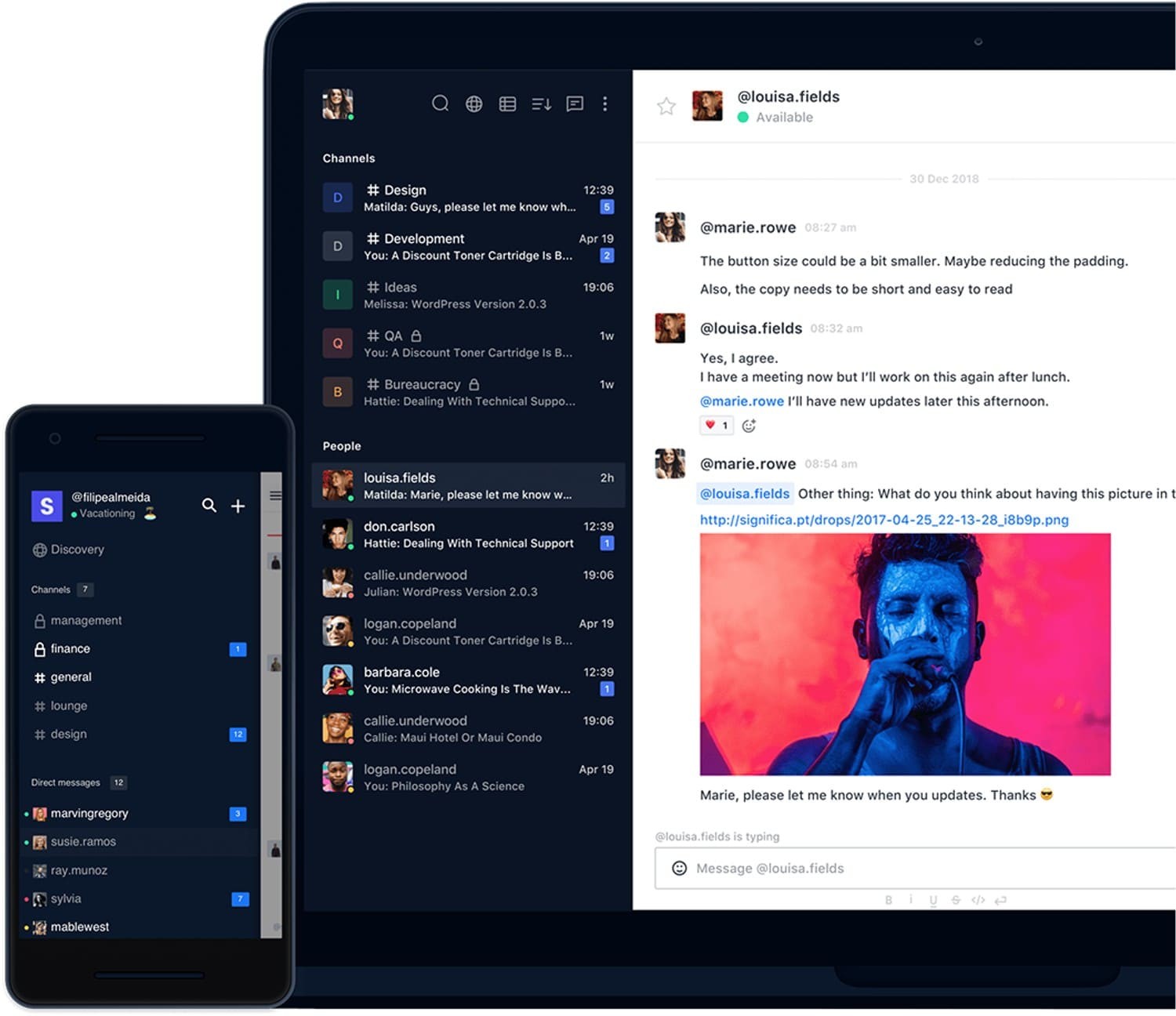
Rocket.Chat is an open-source communication platform that offers team messaging, voice and video calls, file sharing and collaboration tools. Unlike GetStream, which is primarily designed for embedding chat into customer-facing products, Rocket.Chat was originally built as a workplace communication platform. However, its APIs, SDKs and self-hosting options also make it suitable for organisations that need custom messaging solutions with full control over their data.
The platform can be deployed on-premises or in the cloud, making it a popular choice for businesses operating in regulated industries or those with strict security and compliance requirements.
Pros
- Open-source platform. The source code is publicly available, allowing organisations to customise the platform extensively.
- Self-hosting support. Businesses can deploy Rocket.Chat on their own infrastructure to meet data residency and compliance requirements.
- Comprehensive collaboration features. Includes direct messaging, group chat, voice and video calls, file sharing and user management.
- Strong security controls. Supports end-to-end encryption, single sign-on (SSO) and enterprise security features.
- Large developer community. As an established open-source project, Rocket.Chat benefits from active community contributions and a broad ecosystem.
Cons
- Designed primarily for internal communication. Building customer-facing chat or community experiences often requires significant custom development.
- More complex deployment. Self-hosting and ongoing maintenance demand technical expertise and infrastructure resources. Many clients note the complicated initial setup.
- Limited built-in engagement features. Unlike platforms such as GetStream or Watchers, Rocket.Chat does not focus on activity feeds, community engagement or social interactions.
- User interface may require customisation. Teams creating consumer applications may need additional frontend work to deliver a polished in-app experience.
Best for:
Organisations that prioritise open-source software, self-hosting and data ownership, particularly for internal communication platforms or highly customised messaging solutions.
Comparison table for an easier choice
The platforms below differ in more than just chat functionality. Some are complete community platforms with built-in engagement and moderation tools, while others provide only the underlying real-time infrastructure, leaving more of the implementation to your development team.
Use this comparison table to quickly evaluate each solution based on its primary use case, feature set, integration options, pricing model, and the time typically required to get up and running.
| Platform | Best for | Product focus | Community & engagement features | Moderation & safety | Integration options | Pricing | Setup time |
| Watchers | Sports, media, entertainment, fan communities | Community platform with chat, engagement and live experiences | Excellent – chat, live streaming, AI tools, widgets, gamification, analytics | Excellent – AI moderation, semantic analysis, admin tools | WebView for web and mobile platforms | Usage based | Fast |
| Sendbird | Enterprise apps, marketplaces, customer communication | Chat, voice, video, customer engagement | Good – chat, channels, reactions, threads | Excellent | Excellent SDKs for web, iOS, Android, Flutter, React Native, Unity | Premium, usage-based | Fast |
| Ably | Custom real-time applications | Real-time messaging infrastructure | Basic (requires custom development) | Basic (developer-managed) | APIs and SDKs across major platforms | Usage based | Medium-Long |
| TalkJS | SaaS products, marketplaces, CRM | Embeddable chat | Limited – messaging-focused | Good | JavaScript API, REST API, mobile SDKs | Usage based | Very fast |
| MirrorFly | Enterprises requiring self-hosting | Chat, voice and video platform | Moderate | Excellent | Cloud or self-hosted SDKs | Custom quote | Medium |
| Sceyt | Customisable chat applications | Chat APIs and SDKs | Good – messaging, reactions, threads | Good | SDKs for web and mobile | Custom quote | Fast |
| PubNub | Large-scale real-time apps, gaming, IoT | Real-time infrastructure | Basic (developer-built) | Basic (developer-managed) | APIs and SDKs across major platforms | Usage-based | Medium–Long |
| Rocket.Chat | Internal communications, regulated industries | Open-source collaboration platform | Moderate – channels and collaboration | Excellent | Self-hosted or cloud, APIs, SDKs | Free + Enterprise plans | Medium |
Buy, customise or build: which approach is right for your product?
Choosing a GetStream alternative isn't only about features. It's also about deciding how much you want to build yourself. The right approach depends on your budget, engineering resources and long-term product strategy.
Buy a ready-made SaaS
Platforms like Watchers, Sendbird and TalkJS offer chat and community features out of the box, making them the fastest way to launch.
Best for: Startups and product teams that want to minimise development time.
Pros: Fast deployment, low maintenance, managed infrastructure.
Cons: Less flexibility and ongoing subscription costs.
Customise an existing platform
Solutions such as Sceyt, MirrorFly and Rocket.Chat provide more control through APIs, SDKs or self-hosting while avoiding the effort of building everything from scratch.
Best for: Businesses with dedicated engineering teams and specific requirements.
Pros: Greater flexibility, easier integration, more control.
Cons: Longer implementation and higher maintenance.
Build your own solution
Platforms like Ably and PubNub provide the real-time infrastructure, but your team builds the chat experience, moderation and business logic.
Best for: Large organisations with highly specialised requirements.
Pros: Complete control and unlimited customisation.
Cons: Highest cost, longest development time and ongoing responsibility for maintenance and scaling.
How to choose the best GetStream alternative
The right choice depends on what you're trying to build. Here are a few quick recommendations:
- If you need a complete community platform with chat, engagement and monetisation tools → Watchers.
- If you just need a reliable chat API and don't require built-in community features → CometChat.
- If enterprise compliance is a top priority → Sendbird.
- If you need a fully self-hosted solution with complete control over your data → MirrorFly or Rocket.Chat.
- If your engineering team wants to build a bespoke real-time platform from the ground up → Ably or PubNub.
- If you need basic in-app messaging and want to launch quickly → TalkJS.
Accumulated experience or lessons from mistakes: Buy or build social features for your platform?
FAQ about GetStream alternatives
Who are the main GetStream competitors today?
Some of the leading alternatives to GetStream include Watchers, Sendbird, CometChat, TalkJS, MirrorFly, Sceyt, PubNub, Ably and Rocket Chat. The best choice depends on whether you need a complete community platform, a ready-made chat solution or the infrastructure to build your own.
Why can teams move away from GetStream?
The most common reasons are rising costs as applications scale, the need for greater UI and workflow customisation, stricter security or data residency requirements, and more advanced moderation or community management features. Some teams also outgrow Stream's feature set as their products evolve.
What should I compare when picking an alternative?
Features, pricing at your expected scale, customisation options, moderation tools, deployment options (cloud or self-hosted), and analytics are the main things you need to consider. The best platform is the one that fits your current needs and long-term roadmap.
Boost your platform with
Watchers embedded tools for ultimate engagement


