Five Engagement Mechanics Apps Should Use Right Now
Everybody knows about gamification and community-building, but what are the most useful hints to use them in 2026?


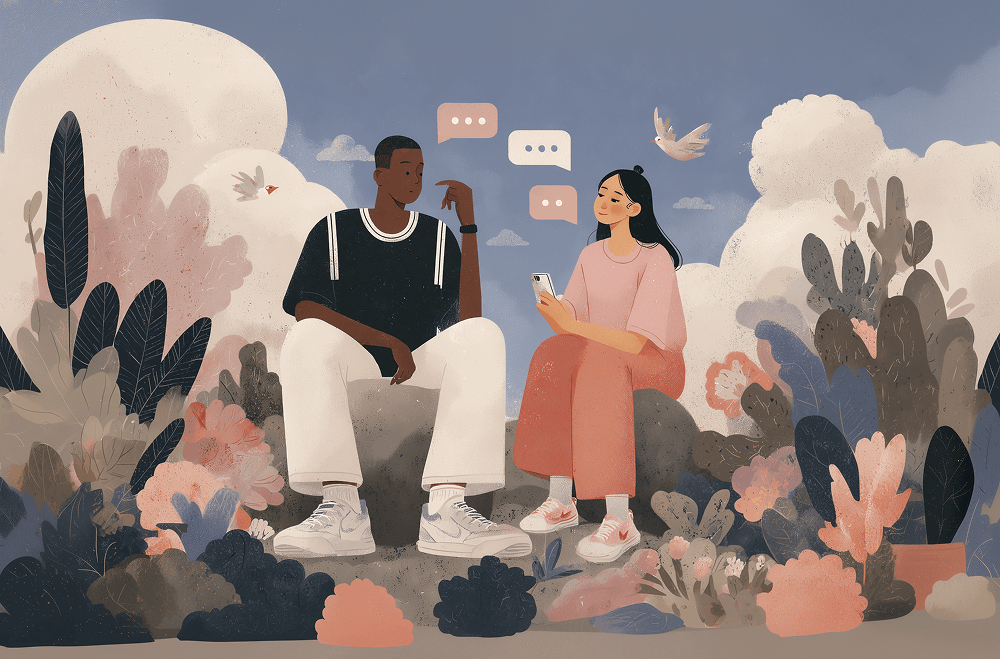
We write and talk a lot about engagement, considering that this term is quite vague and unclear on the one hand but crucially important on the other. It shouldn’t be a metric that has its own independent life with no correlation with the service or platform design. It should be strongly connected with content strategy, UX, onboarding, and trust-building to work for your product.
Here are five engagement mechanics worth paying attention to that you can implement into your strategy right now.
1. Reward starting with the first action
Often, platforms start to build a gamification system toward a big payoff — a milestone at day 30, a badge after ten sessions. The data shows that users who complete an achievement on their very first day retain at roughly 33% after 30 days, compared to about 20% for users who don't get an early win. The gap is produced by one early interaction landing at the right moment.
Academic research shows that achievements influence various types of gamified users. Authors of the paper “Trophies, achievements, and badges: Explaining differences in gamification motivation using self-determination theory and hexad player-type” shared that not only the dominant player type (Achiever) expressed high motivation to get badges, but also other, more independent, types of players, Philanthropist and Free Spirit, expressed the same.
What should you do? Audit the onboarding for the first meaningful action a user can complete, and make sure that they get awarded immediately.
A badge after a completed step, or any other visible marker of progress, changes user attitude. The report, dedicated to banking apps, provided by Deloitte, proved that bank apps with gamification elements had half higher 90-day retention. The mechanism works perfectly when visible progress is available for users from the early stages.
2. Protect the results
How long is your streak on Duolingo? This question is very popular not just because everybody is using the app to learn words with the green owl, but because the app provides user-friendly tools to achieve results in it. They don’t just count your streak and give you funny pictures when it grows, but also protect your streak from bad or lazy days.
Streaks are built on the fear of losing them, but if an app doesn't show empathy for users’ circumstances or even just a wish to have a day of digital detox, the streak won’t be long. Quitting the app after one missed day is not a problem because the app did nothing to protect it. A grace period may change this app's approach without weakening the mechanic, which works better when users don't lose everything built just because of one lazy or tough day.
3. Let users act socially
Many apps showcase passive social proof, like stars, reviews, ratings, etc. A much more effective strategy is allowing users to act the same way as other users did: repeat a workout a friend completed, join a binge-watching challenge, follow someone else’s stock-trading strategy, copy a decision or transaction with one click. This works for various digital experiences: users can follow financial strategies, or can just buy the same shampoo as other users in one click.
Why does it matter? Social proof, like ratings or reviews, speaks to users about trust, whereas actionable social proof works with conversion and influences revenue directly. It turns someone else's transaction into a new customer's next action, with an explicit connection. Apps in fintech, fitness, and commerce can see real revenue growth after adding a "do what they did" mechanic in the scope of their existing social features.
4. Drive pure engagement
Sounds a bit controversial because we started with the goal of defining engagement clearly. Generic engagement is just entertainment and fun for users, like polls automatically generated based on the content users are engaged in at the moment, stickers, emotes, animated reactions during the process of video consumption or gaming, reactions to other users' messages or actions. Why does it matter? Because users tend to seek to be entertained. If they have fun, they will return; if they are bored, they will find another app where, beyond the main activity, they will find something pleasant and additional.
If these engagement practices are also connected with storytelling and produce the narrative, it works much better and gets customers emotionally invested. Many community and marketing strategies today rely on AI to build a sustainable narrative for meaningful engagement that works.
5. Use trust as a retention mechanic
We wrote a lot about community building as a retention strategy, and a serious part of this process is building trust inside the community. When we talk about moderation, we actually discuss both engagement and retention. How come? Users won’t be engaged if they don’t feel that they are in a trusted and secure space; if they are not engaged, they won’t return. Above, we mentioned how the first-day award influences 30-day and 90-day retention. You can lose these achieved results with the correctly built gamification strategy if you don’t build moderation systems that protect your audience.
The pattern across all five
All recommendations above give a user a reason to act at a specific moment and stay after the actions are ]
performed. Engagement strategies should be created not to boost engagement endlessly but to boost it at the correct moment when users want to be engaged.
Frequently asked questions
What is the most effective first step for improving app engagement?
Reward users for completing the first meaningful action. Recent data shows that users who earn an achievement on the first day retain at roughly 33% after 30 days, compared to 20% for those who didn’t get any gamified elements on their first day.
How does streak protection improve retention?
Streaks motivate users through fear of losing progress, but one missed day often causes users to quit entirely. Adding a grace period (like Duolingo does) protects the streak mechanic, so users don't leave the app after a single lazy or busy day.
What is "actionable social proof" and how is it different from reviews or ratings?
Actionable social proof lets users repeat actions other users performed. It can be copying a workout, following a trading strategy, or one-click buying a product someone has just bought. It works as a direct conversion path.
Boost your platform with
Watchers embedded tools for ultimate engagement


